Quick Answer: When Are the Best Months for Swimming in Crete?
June, July, August and September are the best months for swimming in Crete. The sea is generally warm, the days are long, and beach weather is at its most reliable.
August normally brings the warmest water. September offers an excellent combination of sea temperature and more comfortable daytime heat.
If swimming is the main reason for your trip, I’d choose June or September before looking at the busiest summer weeks.
Crete Sea Temperature by Month
▼ Tap to view the full sea temperature table▲ Tap to hide the table
The sea takes time to warm up in spring and holds onto its summer heat well into autumn.
On mobile, swipe left or right to view the full table.
| Month | Average sea temperature | Swimming conditions |
|---|---|---|
| January | 16.5°C | Cold-water swimming |
| February | 15.8°C | Among the coldest months |
| March | 15.9°C | Cold for most visitors |
| April | 16.8°C | Mostly for cold-water swimmers |
| May | 19.1°C | Early swimming season |
| June | 22.3°C | Comfortable for many visitors |
| July | 24.6°C | Warm summer swimming |
| August | 25.7°C | Usually the warmest water |
| September | 25.0°C | Excellent swimming temperature |
| October | 23.2°C | Often pleasant for swimming |
| November | 20.8°C | Swimming remains possible |
| December | 18.3°C | Cool winter conditions |
Historical monthly sea-surface averages for the Chania coastal area, based on 1991–2020 data. Temperatures vary around Crete.
The numbers tell you when the water is likely to feel comfortable. They don’t tell the whole story of a beach day.
I’ve been to beaches where the water was beautifully warm but the waves made swimming unpleasant. And I’ve enjoyed quieter conditions at another beach a short drive away.
That’s why I wouldn’t choose a beach using sea temperature alone.
June: When the Main Swimming Season Begins
June is a strong choice for a beach holiday in Crete.
The sea has usually warmed enough for comfortable swimming, especially during the second half of the month. Daytime temperatures are high without necessarily reaching the intense heat of August.
Beaches are becoming busier, but June generally offers a more relaxed atmosphere than the main summer holiday weeks.
For visitors who want to spend several hours at the beach and still explore towns and villages, June offers an excellent balance.
July and August: Warm Water, Strong Sun and Summer Winds
July and August are the classic swimming months.
The sea is warm, sunshine is abundant, and practically every coastal resort is in full summer mode.
But this is also when Crete’s summer winds can make a noticeable difference.
The Meltemi, associated with northerly winds in the Aegean, can affect exposed parts of the northern coastline. On some days, beaches that looked calm the previous morning have considerable waves.
This is particularly important for families or visitors who want relaxed swimming rather than playing in the surf.
A warm sea doesn’t guarantee a comfortable swim.
My approach is simple: when the beach I’ve chosen is too windy, I look for another part of the coast rather than abandoning the entire day.
September: My Preferred Balance for Swimming
If I had to recommend one month for visitors who want warm water without the full intensity of peak summer, September would be high on my list.
The sea has absorbed heat throughout the summer and normally remains pleasantly warm.
Air temperatures gradually become more comfortable, and the busiest holiday period begins to ease.
You still get long opportunities for beach days, swimming and coastal exploration.
For many visitors, September offers a better overall experience than choosing the hottest month simply because it has the warmest water.
Can You Swim in Crete in April?
Yes. People swim in Crete during April, although the sea is still cold for most holidaymakers.
A sunny afternoon can make the coastline look inviting, but the water will feel quite different from July or September.
If you enjoy cold-water swimming, April can be rewarding. If you’re travelling primarily for comfortable daily swimming, I’d choose a later month.
April is better suited to combining coastal walks, sightseeing and the occasional swim when the weather is right.
Can You Swim in Crete in May?
May is when the swimming season starts to become more attractive.
The air is warming, the days are longer and the sea gradually becomes more comfortable, especially toward the end of the month.
Some visitors are happy swimming in May. Others prefer to wait until June.
The beach itself also matters.
Shallow sandy areas can feel more inviting on sunny days, while exposed beaches may be less comfortable when the wind picks up.
For a holiday that combines swimming with exploring Crete, May can be a very good choice.
Is October Good for Swimming in Crete?
October is often underestimated.
The sea has spent months warming through summer, and it doesn’t suddenly become cold when September ends.
Early October can be particularly enjoyable, with warm water, quieter beaches and pleasant daytime sunshine.
As the month progresses, the weather becomes more variable.
If I’m choosing a beach during autumn, I pay attention to the day’s conditions rather than assuming that one entire coastline will be better.
On cooler days, the middle of the day often feels more comfortable for swimming than early morning, when the air is cooler.
I also favour a beach with easy access to the water and a comfortable place to spend time afterward.
October is a good month for flexible travellers. You may enjoy excellent swimming days, but it’s sensible to plan other activities as well.
Can You Swim in Crete in November?
Yes, although November is a different experience from the main beach season.
The sea may still feel surprisingly mild after summer, but the air is cooler and the weather changes more frequently.
You might have a beautiful sunny afternoon followed by a windy or rainy day.
November is not the month I’d recommend to someone who wants to swim every day.
But if you’re already visiting Crete for its villages, scenery, food and quieter atmosphere, swimming can still be part of the experience.
Why Choosing the Right Beach Matters
One of the most useful things I’ve learned from living in Crete is that a windy day doesn’t necessarily mean every beach will feel the same.
The island has an irregular coastline, with bays, headlands, exposed beaches and sections protected by the surrounding landscape.
Wind direction can change how each place feels. A northern beach may have waves, while a bay facing another direction offers a much more comfortable setting.
And sometimes the wind changes during the day.
This is Crete. Conditions can change within a couple of hours. I share the places and methods that work for me, but the island always has the final word. That’s part of what makes exploring it interesting.
How I Choose a Beach Around Chania When It’s Windy
I live in Chania and regularly travel around Crete in my camper, by car or on a scooter.
My weekends often involve exploring the coast, swimming or fishing.
Fishing, in particular, has taught me to pay attention to small differences in wind and water conditions.
I don’t rely on one favourite beach.
If I’m planning to spend time around the Akrotiri peninsula, I might consider Loutraki, Marathi, Stavros or Agios Onoufrios.
These places face different directions and have different coastal settings.
I know the local roads well enough to compare several options in roughly half an hour, depending on where I start.
Sometimes I find the right place immediately. On other days, I move on.
The important thing is not to look for a beach where the wind never blows. It’s to understand that you have choices.
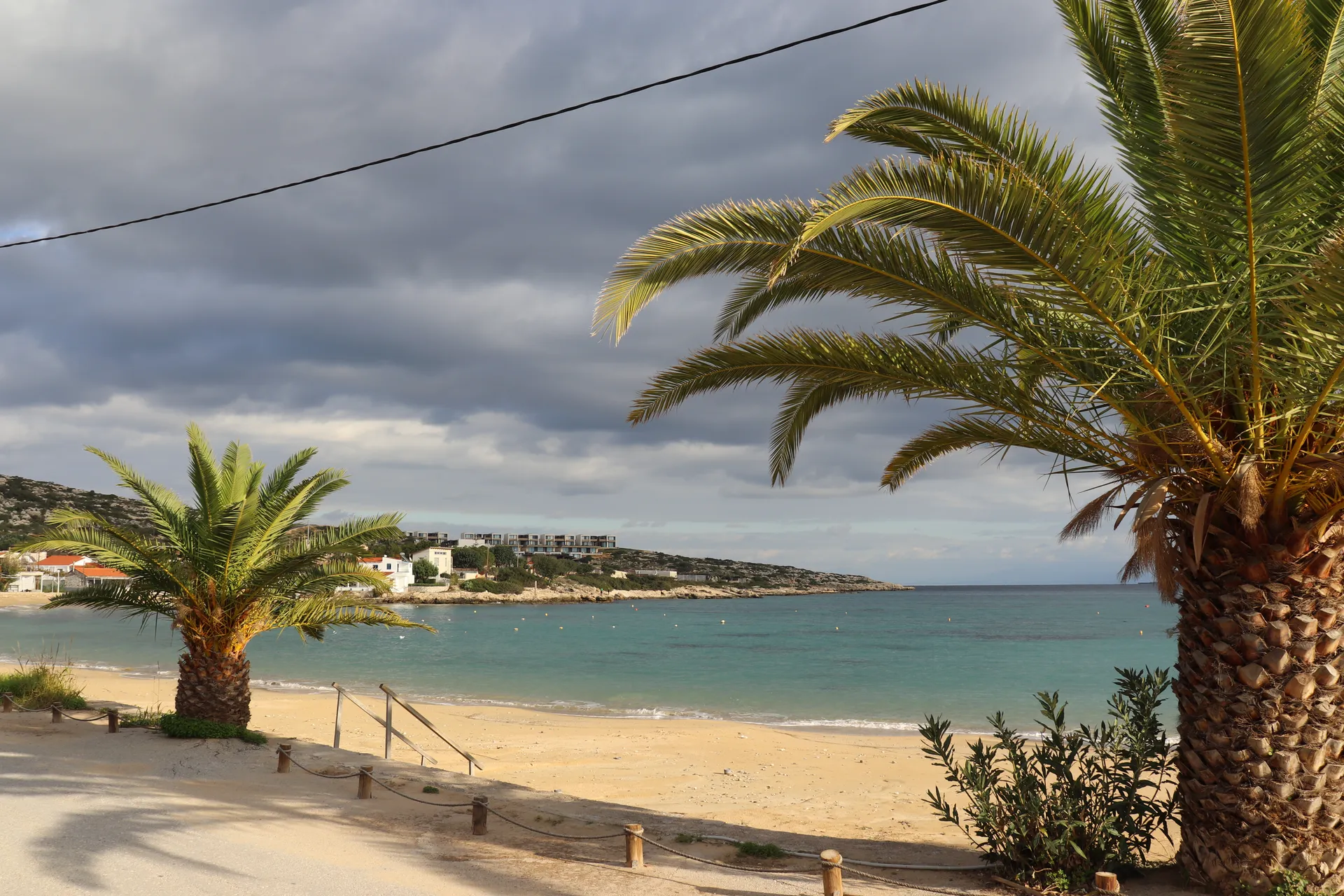
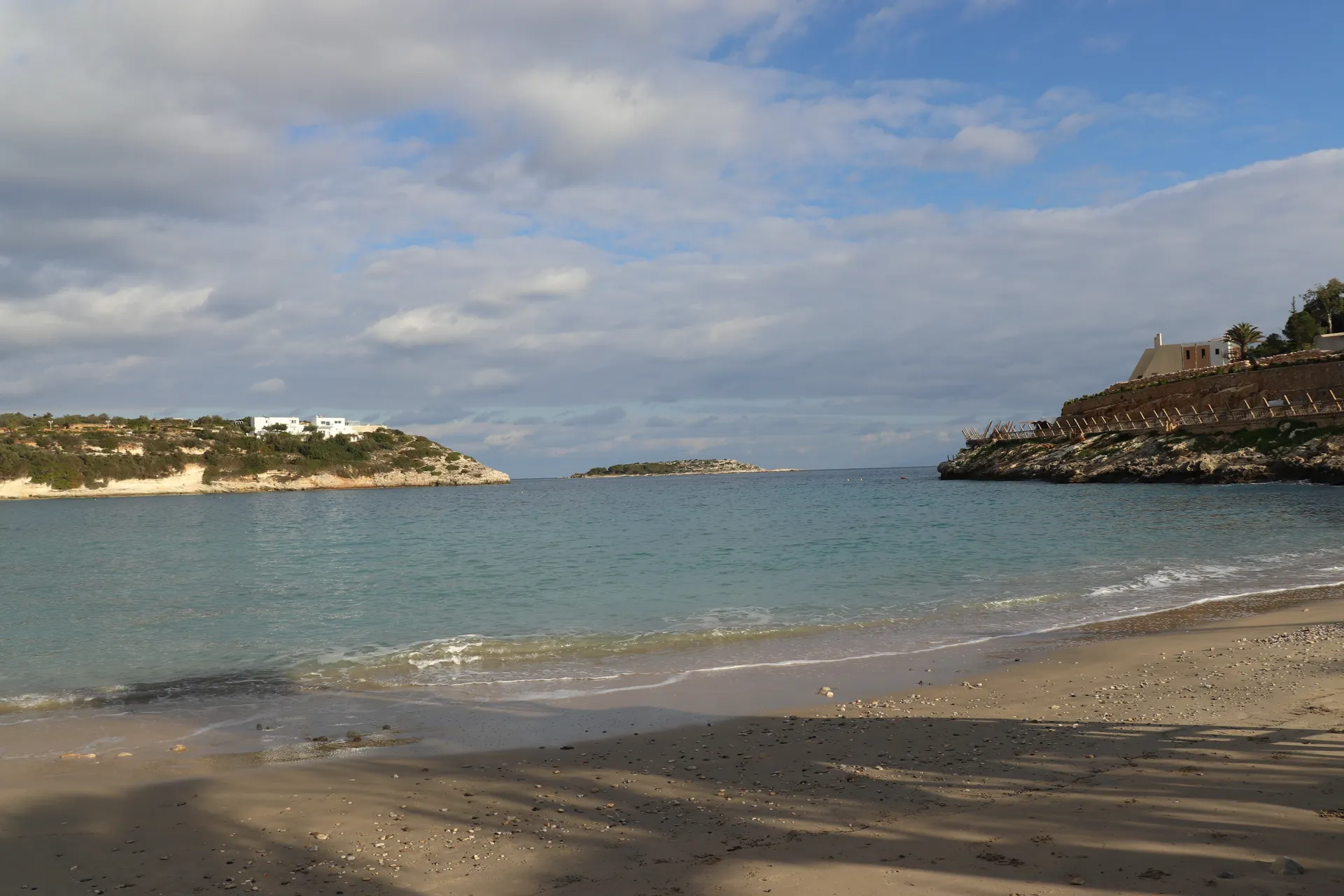
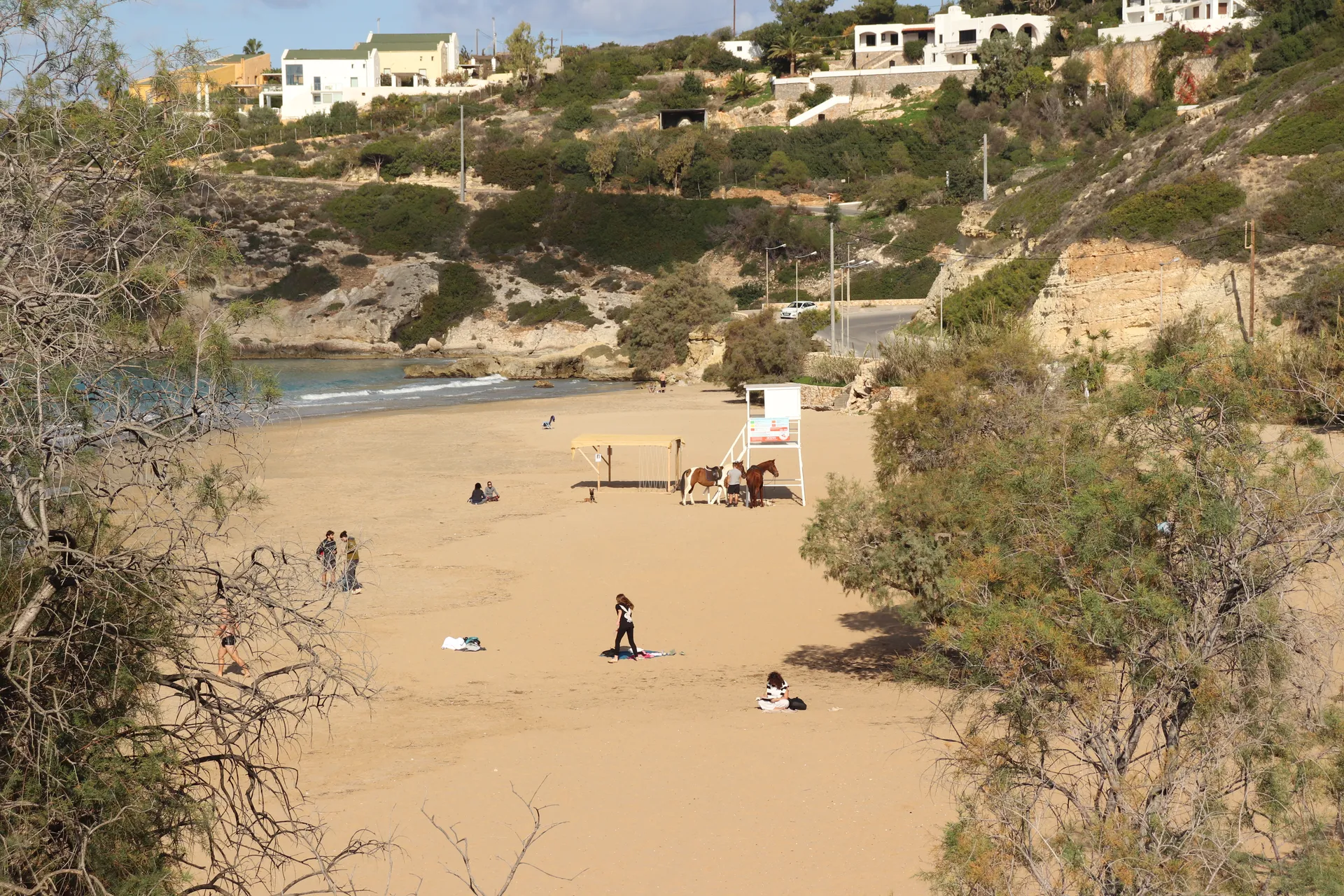
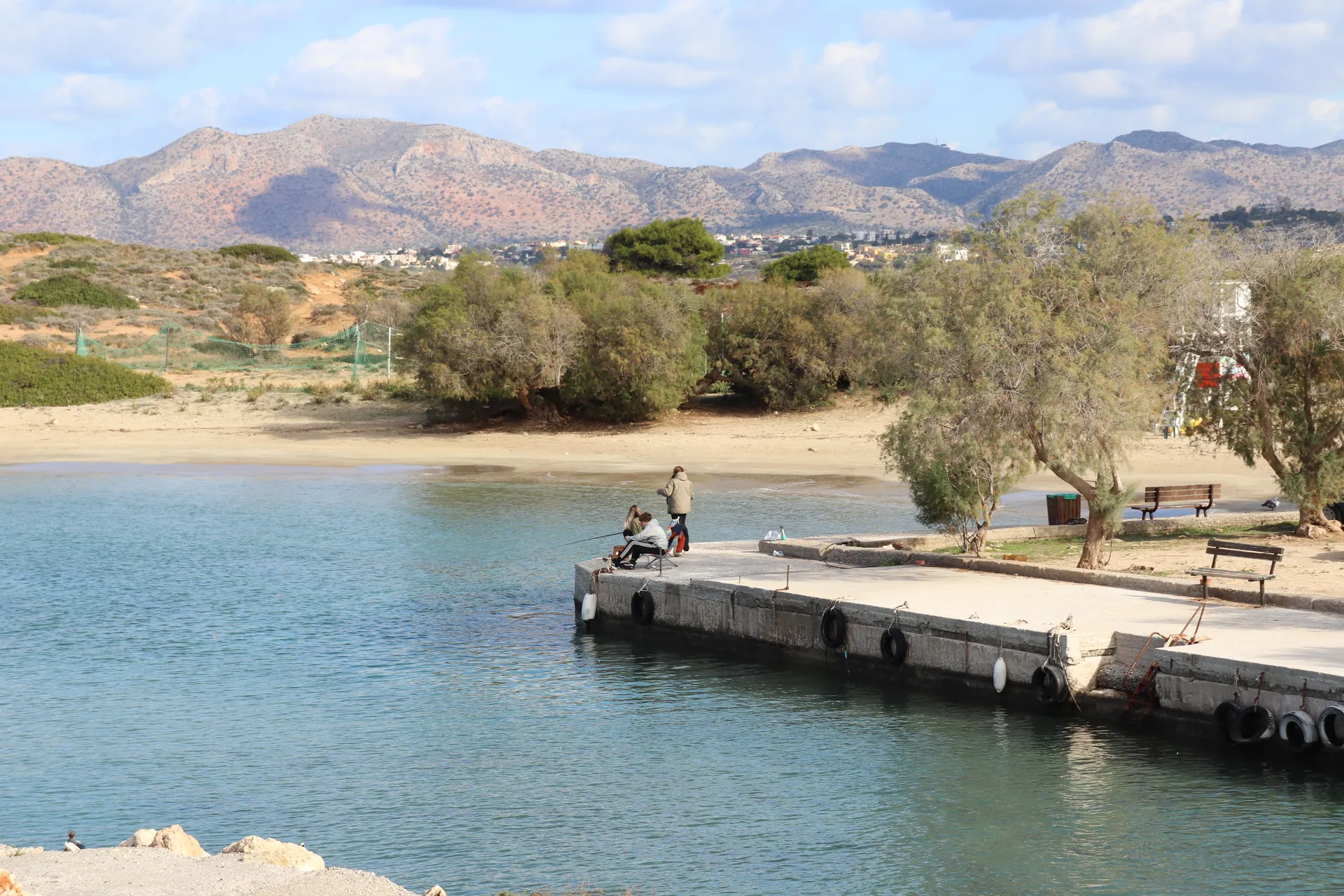
Loutraki and Marathi: Two Beaches I Often Compare
Loutraki and Marathi lie on the Souda Bay side of the Akrotiri peninsula, away from the exposed beaches along the northern side of Chania.
Their location makes them worth considering when northerly winds are affecting other parts of the coast.
I visit both regularly, including for fishing.
One thing I’ve noticed is that Loutraki sometimes catches a breeze that feels almost like a draught passing through the area.
When that happens, I often go and check Marathi.
In my experience, Marathi more often wins this comparison.
It’s a simple local habit, but one that has proved useful over many visits.
The Short Road Between Loutraki and Marathi
There’s also a small road connection that visitors may overlook.
Instead of taking a longer route back through the main road network, you can travel between Loutraki and Marathi along a paved local road through the residential area near the coast.
It passes villas and small junctions, and it isn’t immediately obvious to someone unfamiliar with the area.
Google Maps shows the journey as approximately 1.7 km and 5 minutes by car.
View the coastal driving route between Loutraki and Marathi on Google Maps ↗
If you’re already at Loutraki and the wind is spoiling your swim, Marathi is close enough to check without reorganising your whole day.
The Shallow Side of Marathi
Another reason I like Marathi is the shallow sandy section on one side of the beach.
I personally think of it as the children’s beach.
I’ve walked roughly 60 metres into the water there and still found it barely reaching my knees.
It’s an unusually gentle entry in my experience and one reason this part of the beach is attractive for families.
Young children still need close supervision, particularly when the wind or waves pick up.
Stavros and Agios Onoufrios: More Options on Akrotiri
Loutraki and Marathi aren’t my only choices.
Depending on the weather, I may head towards Stavros or Agios Onoufrios instead.
The point isn’t that one of these beaches is always better.
It’s that the Akrotiri peninsula gives me several different coastal settings to choose from without travelling across the island.
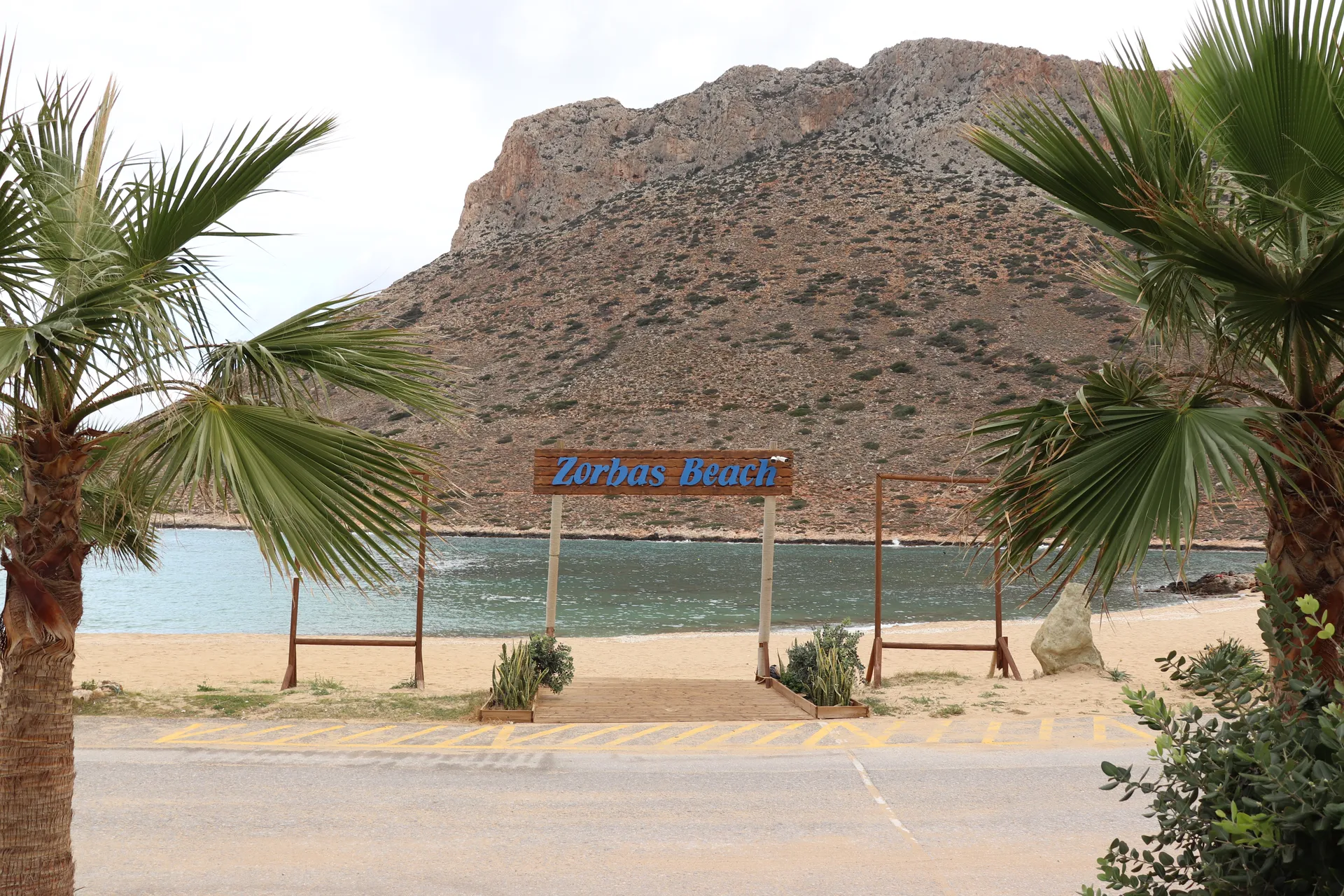
Stavros, with its distinctive bay and mountain backdrop, offers a different setting from the beaches on the Souda Bay side.
Agios Onoufrios is another place I know from spending time along the coast, including fishing.
When one location doesn’t suit the conditions, I consider another.
For someone visiting Chania with a rental car, this is a more useful way to think about beach planning than memorising a list of supposedly wind-free beaches.
How to Check Wind and Waves Before You Go
Before travelling to a beach, I find it useful to understand the general weather conditions.
You don’t need complicated marine knowledge, but three things matter.
Wind direction: A beach facing directly into the wind may feel very different from one on another side of a headland.
Wave conditions: The sea can remain rough even when the wind becomes lighter.
Conditions at the beach itself: What you see when you arrive matters more than a monthly average or yesterday’s photograph.
For marine forecasts, the POSEIDON forecasting system ↗ from the Hellenic Centre for Marine Research is a useful resource for wind and wave information.
And if the sea is clearly rough or unsafe, choose another beach rather than forcing a swim.
Best Swimming Months for Different Travellers
▼ Tap to view the comparison table by travel style▲ Tap to hide the table
On mobile, swipe left or right to view the full table.
| Your priority | Recommended period | Why |
|---|---|---|
| Warmest water | July–September | Sea temperatures are near their seasonal peak |
| Family swimming holiday | June or September | Good seasonal balance, with suitable beaches to choose from |
| Quieter beach holiday | June or September | Generally less peak-season pressure |
| Autumn swimming | September–October | The sea retains its summer warmth |
| Early-season swimming | Late May–June | Improving water temperatures |
| Cold-water swimming | Winter and spring | For swimmers comfortable with cooler conditions |
Frequently Asked Questions
What is the warmest month for swimming in Crete?
August generally has the warmest sea, with average water temperatures around 25–26°C in the Chania area.
Is September warmer than June for swimming?
Yes. The sea is normally warmer in September because it retains the heat accumulated throughout summer.
Can you swim in Crete in April?
Yes, but the sea is cold for most visitors, averaging around 17°C near Chania.
Is May warm enough for swimming in Crete?
For many visitors, especially toward the end of May. Those who prefer warmer water may enjoy June more.
Can you swim in Crete in October?
Yes. October often offers pleasant swimming, particularly during settled weather in the first part of the month.
Can you swim in Crete in November?
Yes, on suitable days, although November is better suited to a flexible holiday than a swimming-focused trip.
Is the south coast always calmer than the north coast?
No. Conditions depend on wind direction, local geography and waves. I prefer choosing a suitable beach for the day rather than assuming one coast is always better.
Where can I go near Chania when the beach is windy?
I often compare Loutraki and Marathi on the Souda Bay side of Akrotiri. Depending on conditions, I also consider Stavros or Agios Onoufrios. Marathi has more often been the calmer choice between Loutraki and Marathi in my experience.
Final Recommendation
For a holiday focused on swimming, June to September is the best period to visit Crete.
Choose July or August for the warmest sea, or June and September for a good balance between comfortable swimming and the wider holiday experience.
May and October can also be rewarding, especially if you’re happy to adjust your plans to the weather.
After years of travelling around Crete, I’ve learned that choosing the right beach on the day can matter just as much as choosing the right month.
That’s the approach I’d recommend: know the season, understand the coastline and keep your options open.