Beyond Rethymno’s Old Town, famous monasteries, and popular beaches, there is another side of the region: green gorges with abandoned settlements, quiet stretches of the south coast, overlooked historic sites, and unusual places that rarely become the main reason for a trip.
This is not a list of supposedly “secret” places that nobody knows. It is a practical shortlist of less obvious and alternative places around Rethymno, with enough information to decide which are worth adding to your trip.
Quick Choice: Where Should You Go?
| If you want… | Choose… | Why |
|---|---|---|
| An easy nature walk near Rethymno | Mili Gorge | Green gorge, old mills, churches, and an abandoned settlement |
| A longer gorge experience | Patsos Gorge | More walking, nature, water, and the Agios Antonios cave sanctuary |
| The quietest beach feel | Ligres | Remote south-coast setting with limited development |
| Dramatic coastal scenery | Agios Pavlos | Sheltered bay and the Ammolofoi sand slopes |
| Space and sunset | Triopetra | Wide open coast and its distinctive three rocks |
| Clear water and snorkeling | Schinaria | Small bay with clear water and rocky underwater scenery |
| A short historical stop | Halevi Monastery | A former monastery complex with a surviving church and ruined buildings |
| Something unusual indoors | Chromonastiri Military Museum | A specialist museum inside a historic Venetian villa |
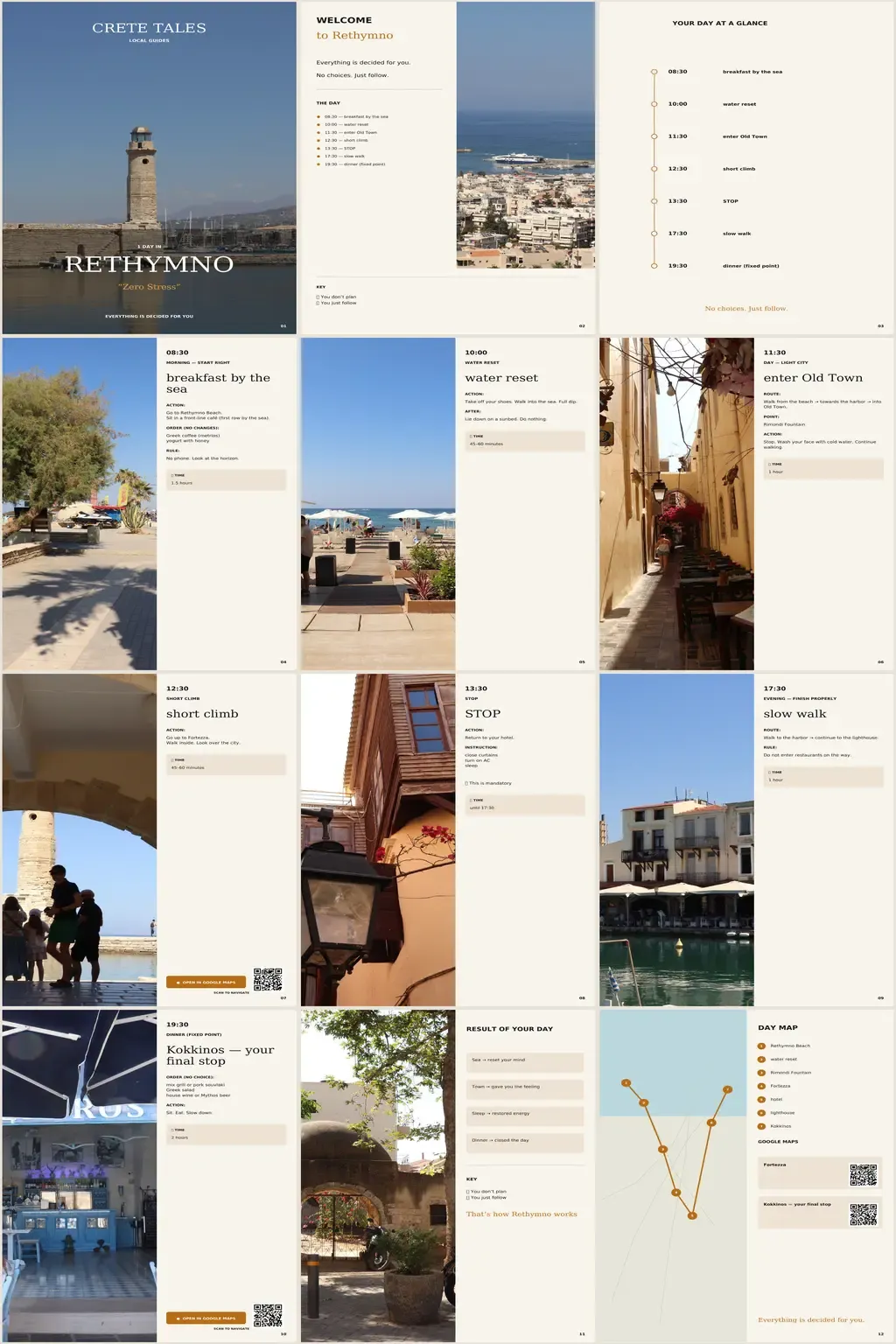
| Something alternative without a car | Rethymno Old Town | Courtyards, passages, old doorways, and overlooked urban details |
Nature Walks: Mili and Patsos
Mili Gorge
Open Mili Gorge in Google Maps →
Mili Gorge combines an easy green walk with the remains of the deserted traditional settlement of Mili. Along the route are old watermills, churches, caves, and traces of the village that once developed around the water running through the gorge.
The walk is relatively easy and does not require turning the outing into a full-day hike. Its main interest is the combination of landscape and human history rather than dramatic gorge scenery alone.
Patsos Gorge
Open Patsos Gorge in Google Maps →
Patsos, in the Amari area, is more focused on the gorge experience itself. The route passes through dense vegetation and rocky terrain, with water present in parts of the gorge depending on conditions.
The cave sanctuary of Agios Antonios adds a cultural and religious element to the walk. A longer exploration requires more time and effort than Mili, and conditions can change after rain or with seasonal water levels.
Quiet Beaches on the South Coast
Ligres
Open Ligres Beach in Google Maps →
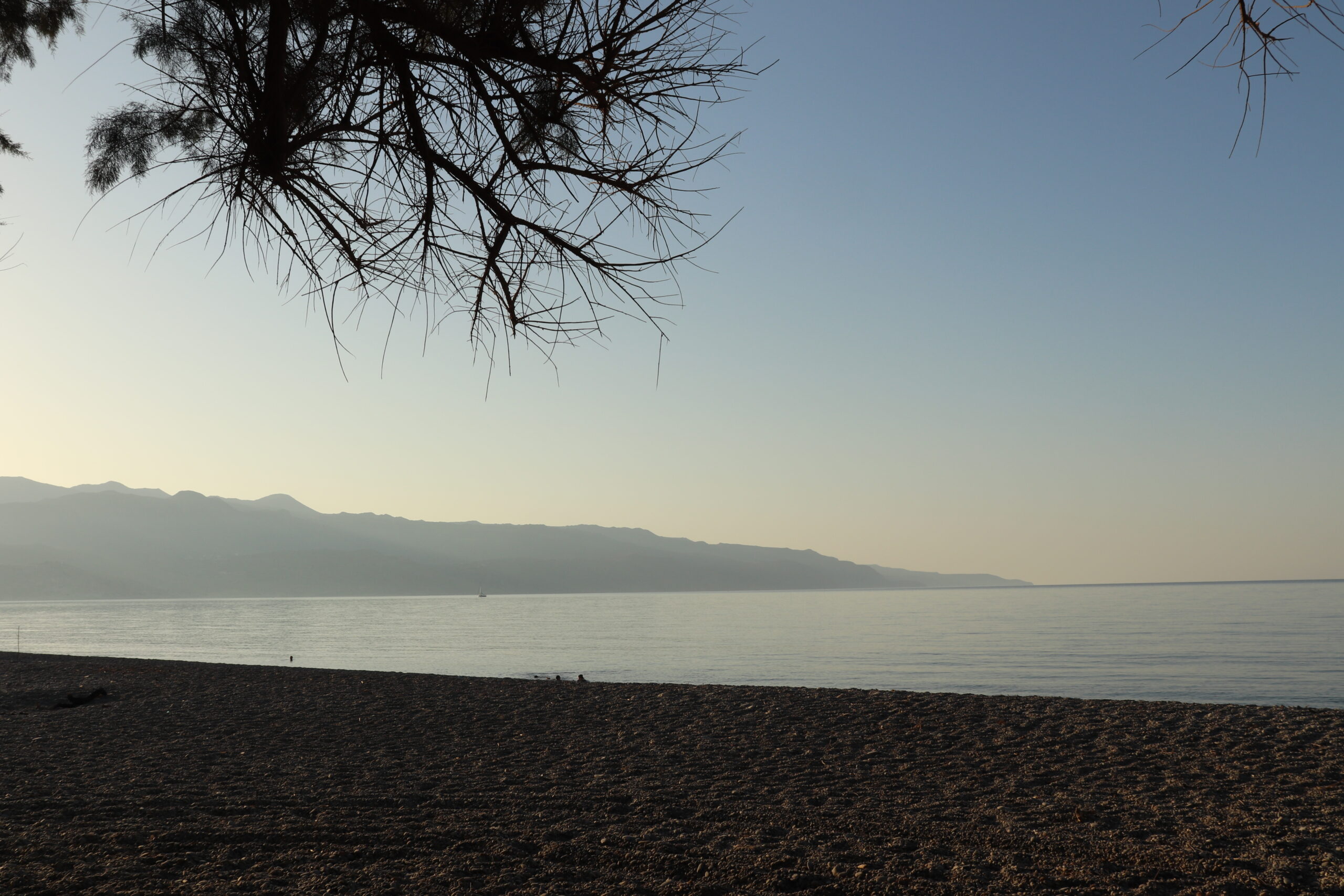
Ligres is a long, largely unorganized beach on Rethymno’s south coast. Development is limited, particularly compared with the resort coastline in the north, and services are concentrated around only part of the beach.
A small seasonal stream can reach the sea near the western end. Do not rely on it being present as a waterfall throughout the year.
Agios Pavlos and Ammolofoi
Open Agios Pavlos Beach in Google Maps →
Agios Pavlos combines a sheltered bay with the much wilder Ammolofoi coastline immediately to the west. Large sand slopes and the open coastal landscape are the main attraction here, while the Ammolofoi side has little shade or infrastructure.
2026 update: a wildfire on 29 July 2026 caused serious damage to part of the tourist infrastructure at Agios Pavlos. Some accommodation has reopened, while some local services remain affected. Check current facilities before relying on restaurants, cafés, or other services.
Triopetra
Open Triopetra Beach in Google Maps →
Triopetra takes its name from the three distinctive rocks beside the cape separating its beach areas. The coast is broad and open, with plenty of space and particularly attractive views later in the day.
Its exposed position also means that wind and waves can have a significant effect on swimming conditions.
Schinaria
Open Schinaria Beach in Google Maps →
Schinaria, also written Skinaria, is a small bay near Lefkogia and Plakias. Clear water and rocky underwater scenery make it particularly suitable for swimming, snorkeling, and diving.
It has a more compact and organized feel than Ligres, and should not be expected to be empty during the summer season.
A Short Historical Stop: Halevi Monastery
Open Halevi Monastery in Google Maps →
Halevi Monastery lies in the countryside near Chromonastiri. The monastery existed during the Venetian period and was dissolved in 1900. The Church of the Dormition survives, while much of the surrounding monastic complex is now in ruins.
Halevi is better treated as a short stop while exploring the countryside southeast of Rethymno than as the main destination of a half-day trip.
Two Unusual Museums
Chromonastiri Military Museum
Open Chromonastiri Military Museum in Google Maps →
About 11 km southeast of Rethymno, the museum occupies Villa Clodio, a historic residence dating from the Venetian period. The building retains architectural features from different periods, while the collection covers military history including the Battle of Crete, uniforms, weapons, photographs, vehicles, aircraft, tanks, and artillery.
Opening days and hours are limited and can change, so check the current schedule before making a dedicated trip.
Potamianos Wax Museum, Zoniana
Open Potamianos Wax Museum in Google Maps →
The Potamianos Wax Museum presents Cretan history and tradition through 87 wax figures arranged in 14 scenes across roughly 700 square metres.
This is the farther option if you are already exploring inland Rethymno. Zoniana is considerably farther from the city than Chromonastiri, so the museum works best as an addition to an inland route rather than as a dedicated museum trip from Rethymno. Check current opening hours before travelling.
Worth Noticing If You Are Already Driving South
Kotsifou Gorge and Agios Nikolaos Chapel: if you are already driving toward Plakias or the south coast, look for the small Agios Nikolaos chapel set into the rocky gorge landscape.
Open Agios Nikolaos Chapel in Google Maps →
Treat it as an interesting stop along the route rather than a separate excursion, and stop only where it is safe and legal to leave the road.
Without a Car: Look Closer at Rethymno Old Town
You do not have to leave Rethymno to find its less obvious side. Away from the busiest Old Town streets, residential courtyards, narrow passages, old doorways, small gardens, and architectural details reveal parts of the historic centre that are easy to walk past.
Many courtyards are private or semi-private. Observe them from public streets and passages, and never enter residential property simply because a gate or doorway is open.
Explore Rethymno’s hidden courtyards respectfully.
Before You Go
Transport: most gorges, countryside sites, and south-coast beaches are considerably easier to reach by car. Without one, Rethymno Old Town is the most practical option on this list.
Access: ruined buildings may be unstable, religious sites may have restricted access, and courtyards may be private. Respect gates, signs, property boundaries, and local residents.
Conditions: rain and water levels can affect gorge routes, while wind and waves can change south-coast beach conditions. Summer heat and limited shade should also be considered before longer walks.
Current information: check museum opening hours, seasonal facilities, road conditions, and local services before making a dedicated journey. This is particularly important at Agios Pavlos in 2026 following the July wildfire.
Choose one or two places that fit your route rather than trying to turn every alternative stop into a separate excursion.