Your First Day in Lasithi — Already Solved
Where to go, what to skip, where to eat, when to move, and how long everything realistically takes — already figured out for you by someone living in Crete.
No endless searching, random tourist stops, or wasted hours trying to plan the day yourself.
Just open the route on your phone and follow the day step by step.
What the South Coast of Lasithi Actually Is
The South Coast of Lasithi is not a single resort and not a unified town. It is a long stretch of coastline facing the Libyan Sea, running roughly from Myrtos in the west to Xerokampos in the east. Between these points you find small villages, agricultural plains, exposed beaches, and large sections of undeveloped coast.
This part of Crete feels physically wider and more open than the north. There are fewer marinas, fewer organized waterfronts, and significantly less structured tourism. Distance is part of the experience.
Main Settlements Along the Coast
Myrtos
A small seaside village west of Ierapetra. Pebble beach, relaxed tavernas, minimal nightlife. Suitable for quiet stays rather than active sightseeing.
Ierapetra South Coast
East of Ierapetra town, the coastline becomes flatter and more agricultural. Long beaches stretch along greenhouse fields. Access is easy, but services thin out quickly outside town limits.
Makry Gialos
The most structured part of the south coast. Sandy beaches, shallow water, small hotels and apartments. This is the softest entry point for families.
Koutsouras & Achlia
Small coastal communities between Makry Gialos and Xerokampos. Water becomes deeper. Wind exposure increases. Infrastructure remains limited.
Xerokampos
The eastern end of the south coast. Remote bays with turquoise water and very low density. Access requires mountain driving.
Landscape & Climate
The south coast is hotter than much of northern Lasithi. Ierapetra is known as one of the warmest areas in Greece. Summer temperatures are high and shade is limited on many beaches.
Mountains drop steeply toward the sea in several sections. Plains around Ierapetra are flat and dominated by agriculture. Vegetation is dry and sparse compared to northern coastal zones.
Beach Characteristics
Beach type varies by area:
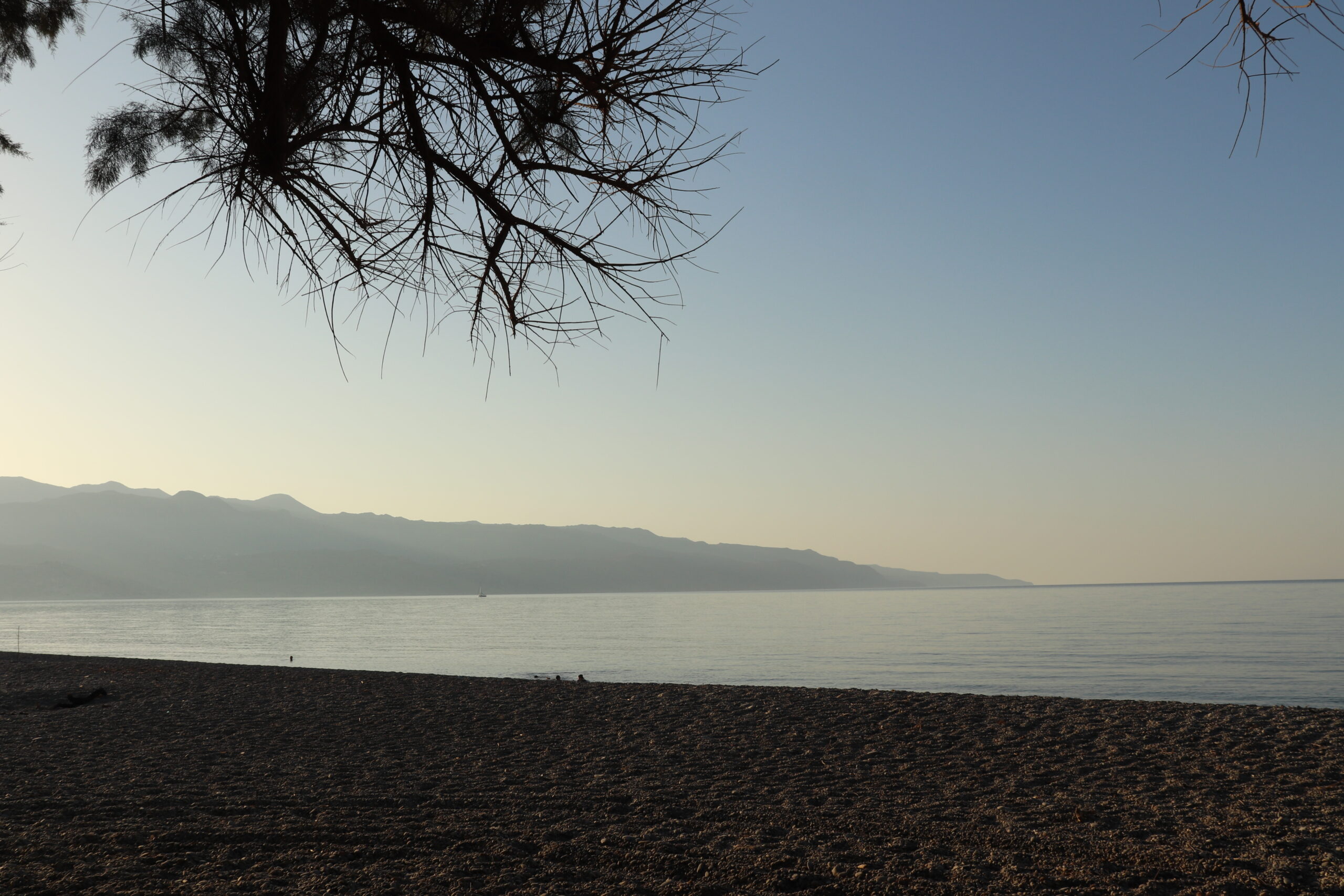
- Pebble beaches near Myrtos and west of Ierapetra
- Mixed sand and pebble near Makry Gialos
- Soft sand and turquoise bays around Xerokampos
Water clarity is usually excellent. Entry can become deep quickly. On windy days, swimming conditions change rapidly due to open-sea exposure.
Driving Reality
The coastline is not one continuous scenic road. You often drive inland and reconnect. Roads are paved but narrow in sections, with curves through mountain terrain.
- Ierapetra to Makry Gialos: approx. 30–40 minutes
- Makry Gialos to Xerokampos: approx. 45–60 minutes
Fuel stations are concentrated in Ierapetra and Makry Gialos. Planning ahead matters.
Wind & Sea Conditions
The Libyan Sea behaves differently from the north coast. South winds can create humidity and wave activity. When strong north winds hit Crete, the south coast may be calmer.
Wind direction determines swimming safety. Conditions can change within hours.
Accommodation Style
Large resorts are rare. Most options include:
- Small family-run apartments
- Studios and simple hotels
- Independent villas
Evenings are quiet. Entertainment infrastructure is minimal outside Makry Gialos.
Who This Area Is For
- Travelers wanting space and low density
- Couples seeking quiet seaside rhythm
- Visitors avoiding mass tourism
- People comfortable with driving
It is less suitable for travelers expecting resort nightlife or walkable town centers.
How to Use the South Coast in Your Trip
The south coast works well as:
- A 2–3 day segment within a larger Lasithi itinerary
- A 5–7 day slow stay focused on beach repetition and quiet routine
It is not about checking landmarks. It is about atmosphere and space.
North Coast vs South Coast of Lasithi
The north coast (Agios Nikolaos, Elounda) offers structured tourism, marinas, and consistent services.
The south coast offers openness, distance, agricultural landscapes, and fewer visitors.
The choice depends on whether you prioritize infrastructure or isolation.
Is the South Coast Worth It?
Yes — if your expectations are aligned.
The South Coast of Lasithi does not deliver dramatic postcard towns. It delivers scale, quiet beaches, strong sun, and simplicity. For some travelers, this becomes the most authentic part of eastern Crete.
Practical Infrastructure on the South Coast
Infrastructure is uneven along the coastline. Ierapetra has full services: supermarkets, pharmacies, banks, medical facilities, and fuel stations. Makry Gialos offers basic grocery stores, tavernas, and seasonal services. Beyond that, facilities become sparse.
ATMs are not available in every small settlement. Large supermarkets exist mainly in Ierapetra. If staying in remote areas such as Xerokampos, shopping should be done in advance.
Public transport along the south coast is limited and not designed for flexible exploration. Schedules are infrequent and often oriented toward local needs rather than tourism.
Seasonality: When the Coast Feels Different
From June to September, the south coast is hot and dry. Beaches are fully accessible, and tavernas operate daily. July and August bring the highest temperatures and occasional strong winds.
In May and October, the region becomes noticeably quieter. Water remains swimmable, but some smaller businesses may reduce operating hours.
From November to March, many accommodations close outside Ierapetra. The coastline becomes residential and agricultural rather than touristic.
How This HUB Connects to the Rest of Lasithi
The south coast works best when understood as one component of a larger Lasithi trip. It contrasts strongly with the structured north coast and complements the far east’s wilder landscapes.
Travelers often combine a north-coast base (Agios Nikolaos or Elounda) with 2–3 nights on the south coast to experience both infrastructure and isolation within the same region.
This coastline is not a replacement for the north. It is a deliberate alternative.
Your First Day in Lasithi — Already Solved
Where to go, what to skip, where to eat, when to move, and how long everything realistically takes — already figured out for you by someone living in Crete.
No endless searching, random tourist stops, or wasted hours trying to plan the day yourself.
Just open the route on your phone and follow the day step by step.