Myrtos Beach sits directly in front of the village of Myrtos, west of Ierapetra. Unlike the long open stretches further east, this is a compact shoreline integrated into daily village life.
Surface & Water Entry
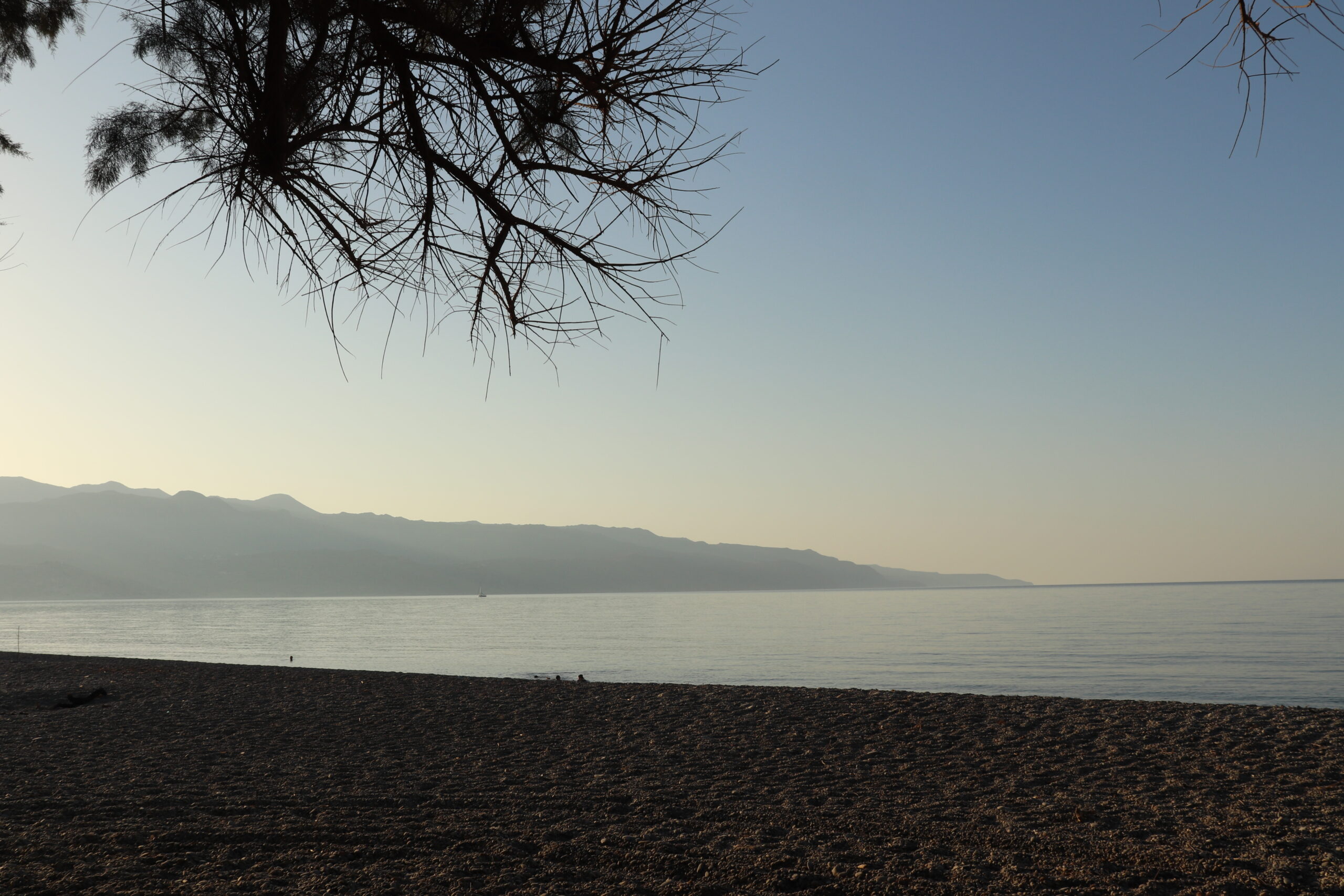
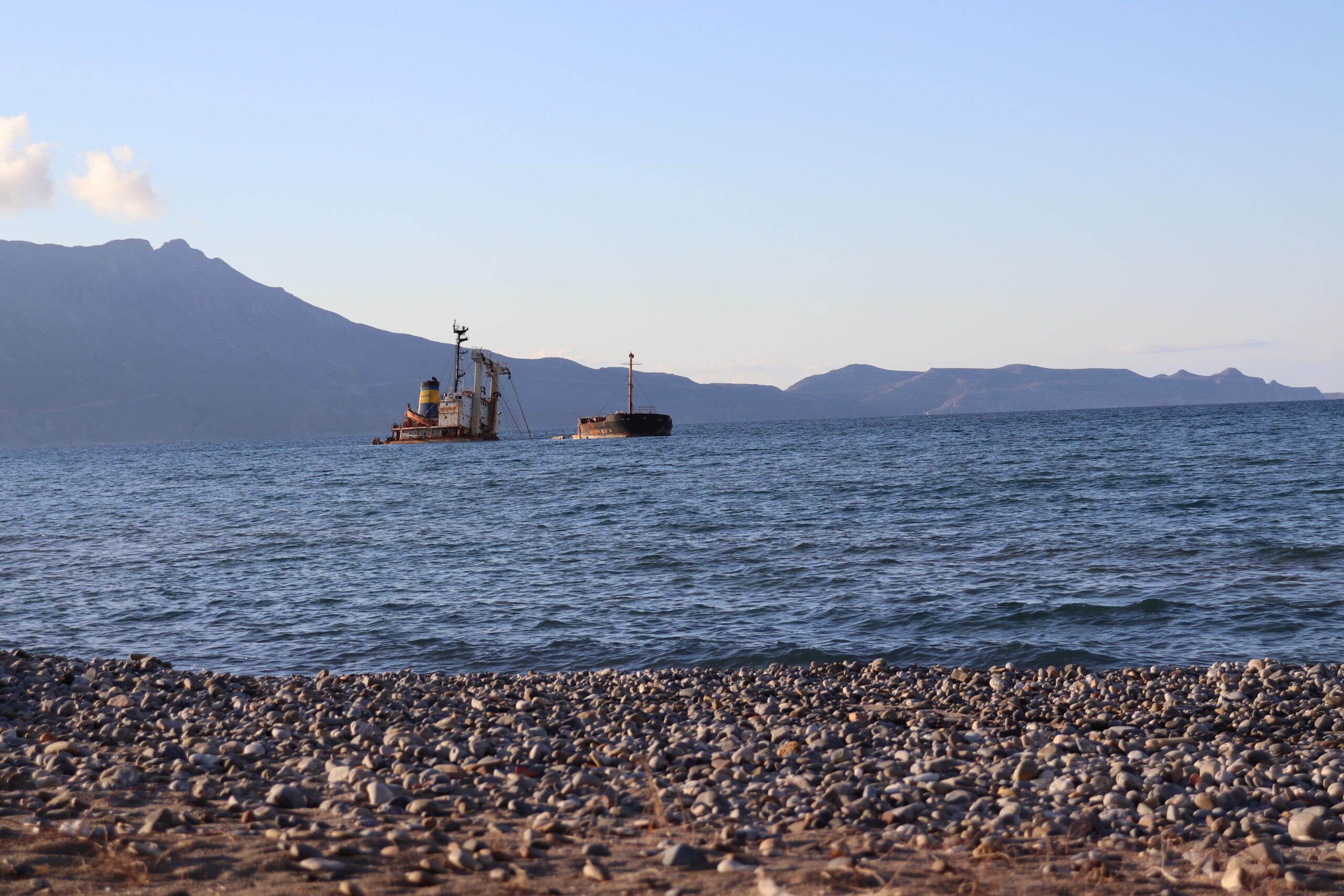
The beach consists primarily of fine grey pebbles. Sand is minimal. Water depth increases relatively quickly, especially compared to Makry Gialos.
The seabed remains clear, and water visibility is typically excellent due to the pebble surface.
Swimming Conditions
The Libyan Sea here can be calm, but wind exposure varies depending on direction. On moderate days, swimming is comfortable for adults.
Because depth increases faster than on sandy beaches, Myrtos is better suited to confident swimmers rather than very young children.
Beach Organization
Organization is moderate. Sunbeds and umbrellas are available in sections near tavernas. Large-scale resort infrastructure is absent.
It retains a local and relaxed atmosphere.
Village Proximity
One of Myrtos Beach’s strongest advantages is proximity. Cafés, bakeries, and tavernas are steps away.
Visitors staying in the village can access the beach without a car.
Parking
Parking is available along village streets and near the shoreline. In peak summer, space becomes tighter but remains manageable compared to northern Crete.
Shade & Natural Cover
Natural shade is limited. Most protection comes from umbrellas rather than trees.
Who This Beach Suits
- Couples seeking quiet atmosphere
- Travelers staying directly in Myrtos
- Adults who prefer pebble swimming clarity
Who Might Prefer Another Beach
- Families needing shallow sandy entry
- Visitors seeking wide, open coastal space
- Travelers looking for resort-level facilities
Best Time of Day
Morning hours offer calmer water and lower density. Late afternoon provides softer light and cooler temperatures.
Final Assessment
Myrtos Beach is compact, clear, and integrated into village life. It is not the most dramatic or expansive beach in South Lasithi, but it offers convenience and calm consistency.
Wind Patterns & Sea Behavior
Myrtos faces directly south toward the open Libyan Sea. This orientation means the beach is not fully protected by natural bays. Wind direction plays a major role in swimming comfort.
When northern winds (Meltemi) affect the island, Myrtos often remains relatively stable compared to northern Crete. However, when southern winds appear, wave activity increases quickly because there is no offshore barrier.
Unlike enclosed bays such as Agia Fotia, Myrtos does not provide strong natural shelter. Water clarity remains high in calm conditions, but on windy days, the pebble seabed can create slight turbulence near the shore.
For best swimming conditions, morning hours are usually more predictable than late afternoon when wind intensity may rise.
Seasonal Differences
In May and early June, Myrtos feels particularly quiet. Water temperature is slightly cooler than Makry Gialos due to faster depth increase, but clarity is exceptional.
July and August bring higher temperatures and more visitors, though Myrtos never reaches the density levels of northern resort towns. Parking becomes tighter, and organized sections fill earlier in the day.
September is often the most balanced month. The sea remains warm, crowds reduce, and wind patterns stabilize.
During winter months, the village becomes residential and low-activity. Swimming is possible on calm days, but facilities operate at reduced levels.
Comparing Myrtos to Other South Lasithi Beaches
Compared to Makry Gialos, Myrtos has less sand and steeper entry. Compared to Koutsounari, it offers less open space but more village integration. Compared to Xerokampos, it is easier to access but less visually dramatic.
Myrtos is not the largest or the most photogenic beach in South Lasithi. Its strength lies in balance — direct access, clarity, and manageable scale.
It works best for travelers who value proximity and calm routine over expansive landscapes.