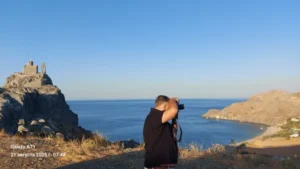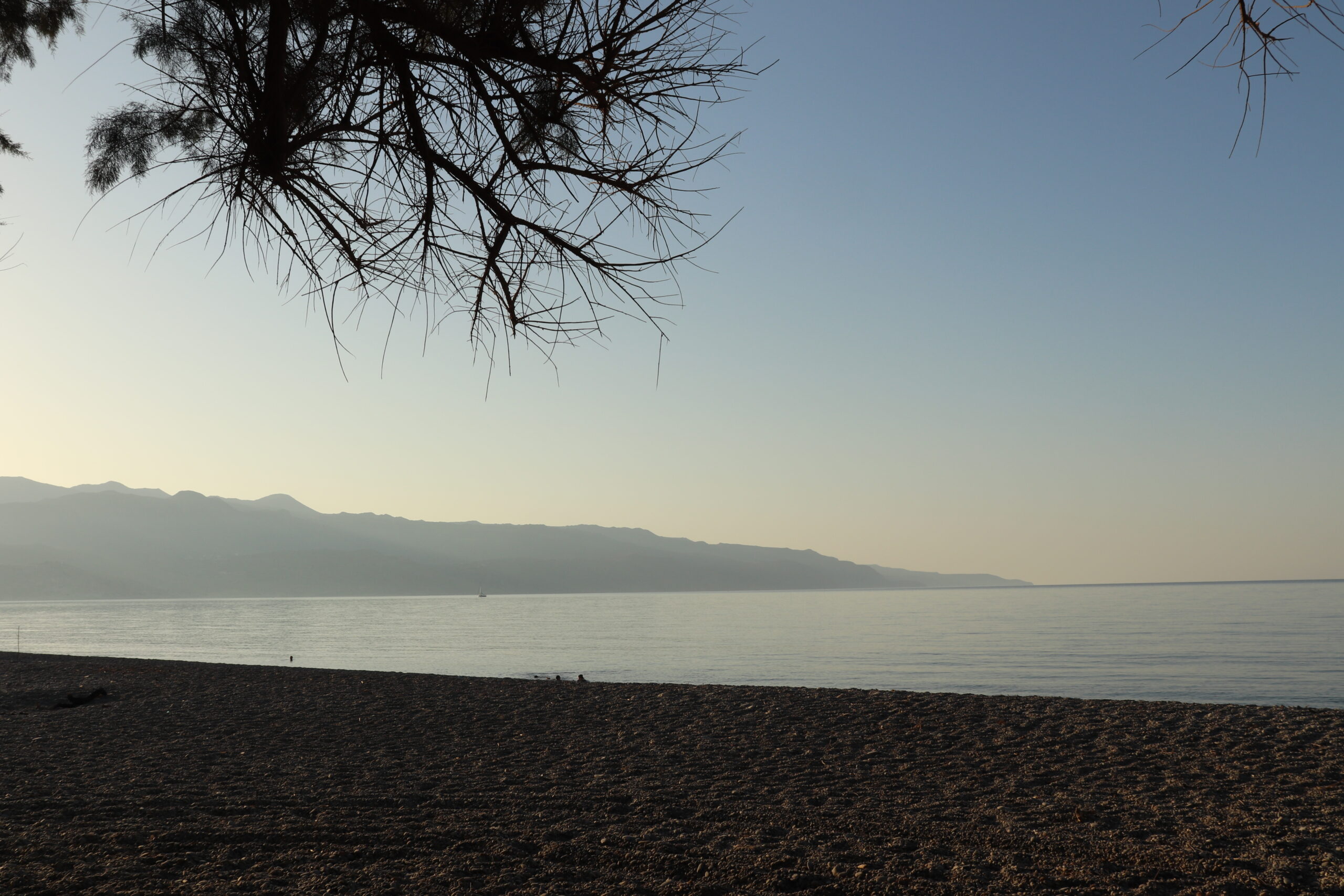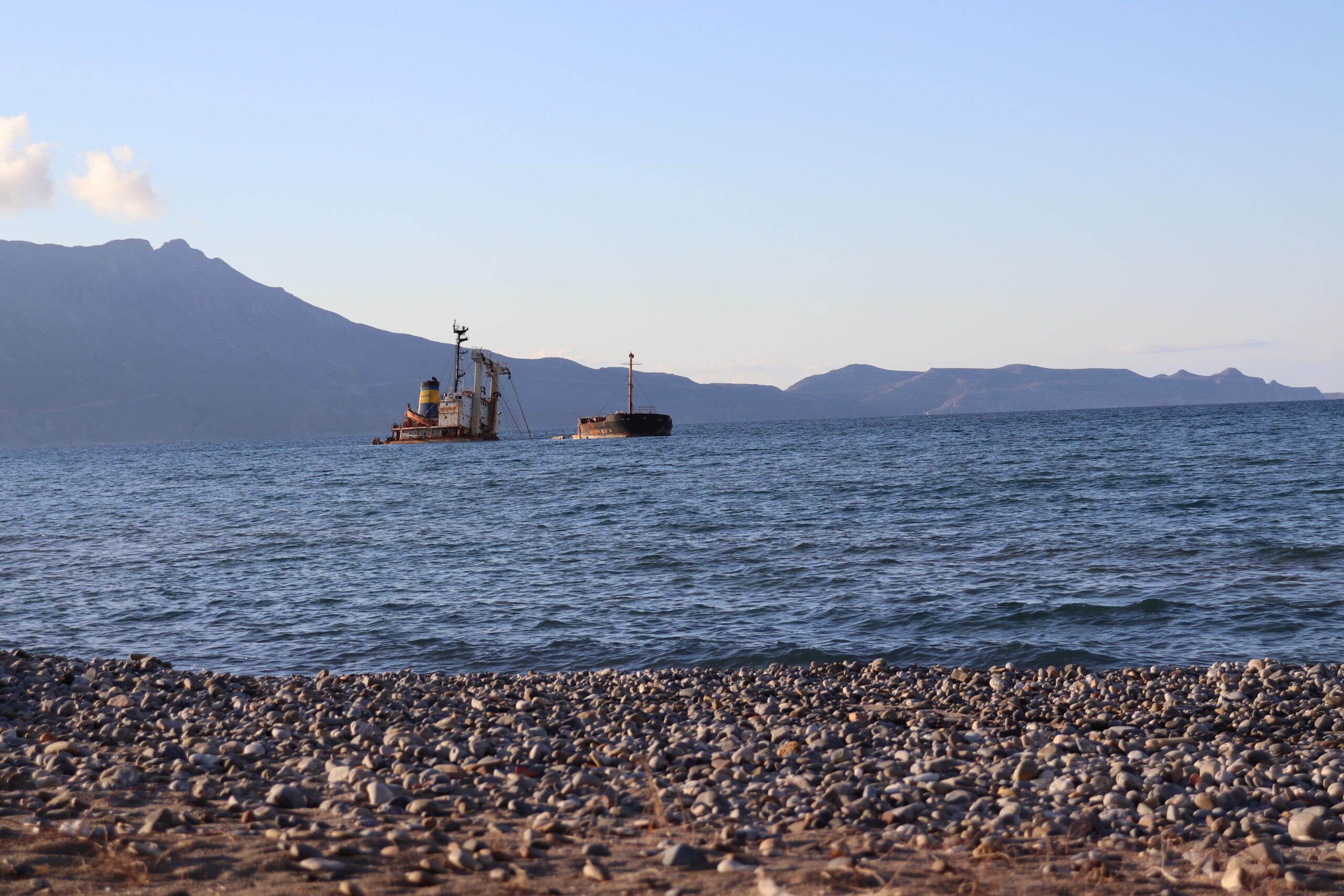
Agia Fotia Beach is located east of Ierapetra along the South Coast of Lasithi. Unlike the long open stretches near Koutsounari, this beach sits inside a defined rocky cove.
Beach Structure & Setting
The shoreline curves in a horseshoe shape, bordered by rocky slopes and low cliffs. This gives the beach a visually enclosed feeling.
It feels more contained and structured than the wide, open Libyan Sea coastline nearby.
Surface & Water Entry
The surface consists mainly of small pebbles mixed with sand patches. Entry into the water is moderate — not as shallow as Makry Gialos, but not as steep as Myrtos.
Water clarity is typically high due to the pebble seabed.
Wind Protection
Because Agia Fotia sits inside a curved bay, it offers better shelter from certain wind directions compared to fully exposed beaches.
However, it is not completely protected. Strong southern winds can still create wave activity.
Facilities
The beach has moderate organization:
- Sunbeds and umbrellas in sections
- Tavernas nearby
- Basic services in summer months
It remains smaller and less commercial than major resort beaches.
Parking & Access
Access is straightforward via the coastal road east of Ierapetra. Parking is available near the beach, though space is limited during peak season.
Who This Beach Suits
- Travelers wanting a defined bay rather than open coastline
- Couples seeking moderate infrastructure
- Visitors staying near Ierapetra
Who Might Prefer Another Beach
- Families needing very shallow sandy entry
- Travelers seeking wide, low-density open beaches
- Visitors wanting completely untouched landscape
Best Time of Day
Morning provides calmer conditions and easier parking. Afternoon can bring stronger wind depending on direction.
Final Assessment
Agia Fotia offers balance — more structure than the open stretches of South Lasithi, but without resort-level intensity. It works best for travelers who want definition and convenience without full-scale development.
Seasonal Behavior & Crowd Patterns
Agia Fotia changes noticeably depending on the month. In May and early June, the beach feels spacious and quiet. Visitor density remains low, and parking is simple. Water temperature may be slightly cooler than Makry Gialos, but clarity is exceptional.
July and August bring higher demand. Because the bay is compact, it fills faster than long beaches such as Koutsounari. Organized sunbed sections can reach capacity by late morning. The limited physical width of the cove makes density more visible compared to open coastline stretches.
September is often the most balanced period. The sea remains warm, organized facilities operate normally, and visitor numbers decrease. Wind conditions also tend to stabilize.
In October, services may begin reducing hours, but the beach itself remains accessible. During winter, Agia Fotia becomes quiet and residential. Swimming is possible on calm days, but facilities operate minimally.
Comparing Agia Fotia to Other South Coast Options
Compared to Myrtos, Agia Fotia offers a more defined bay and slightly more sand underfoot. Water entry is less steep, making it moderately easier for mixed-age groups.
Compared to Koutsounari and Long Beach, Agia Fotia sacrifices scale for enclosure. You gain a sense of protection and structure but lose the vast, open-horizon feeling.
Compared to Makry Gialos, it is less sandy and slightly deeper, but also less organized and less family-centered.
Compared to Xerokampos, Agia Fotia is easier to reach and offers more facilities, but lacks the dramatic landscape and wide sandy dunes.
Agia Fotia works best as a middle-ground beach: more defined than the open Libyan stretches, less commercial than primary resort zones, and easier to access than the remote eastern coast.
Its strength is not size or spectacle — it is proportion and balance.