Diaskari Beach extends east of Lagoufa and represents a quieter continuation of the Makry Gialos coastal zone. It shifts further away from concentrated village structure and toward open shoreline rhythm.
Scale & Setting
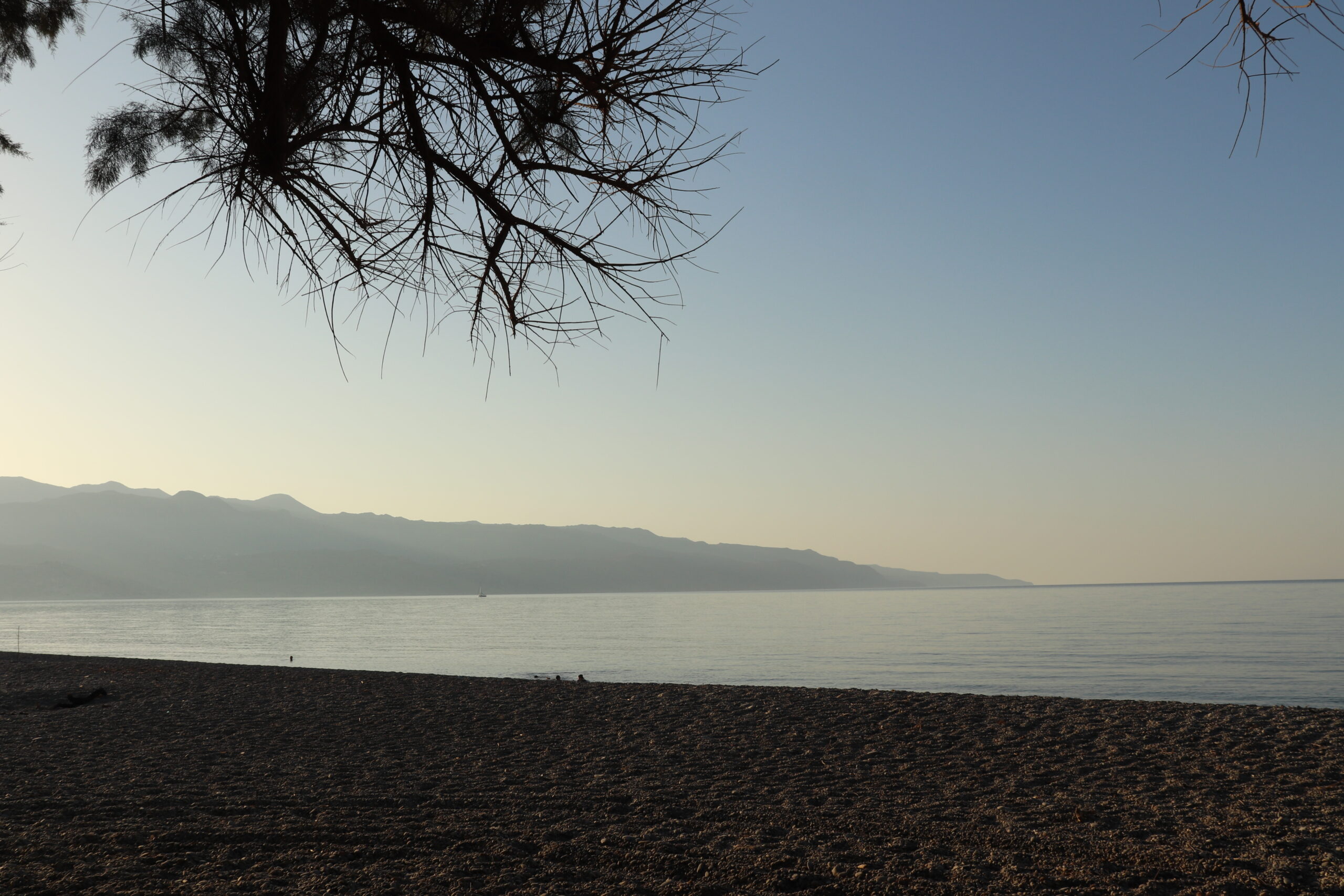
The beach runs along a broad horizontal stretch without a defined cove. Landscape elements are minimal — low hills, open sea horizon, and uninterrupted shoreline.
Visually, Diaskari feels more expansive than central Makry Gialos.
Surface & Sand
The surface consists mainly of sand with occasional small pebbles. Texture is firm but comfortable for walking.
Compared to Koutsounari, sand here is lighter and more consistent.
Water Entry & Swimming
Entry into the water is gradual, making swimming conditions suitable for most visitors. Depth increases steadily rather than abruptly.
Wave activity depends on wind direction. As with most south coast beaches, exposure to the open Libyan Sea means conditions can shift during stronger winds.
Organization & Infrastructure
- Limited organized sunbed sections
- Fewer tavernas directly on the sand
- Minimal commercial intensity
Diaskari remains largely unstructured compared to Makry Gialos.
Parking & Access
Access is simple via the coastal road. Informal parking areas are common, and density is usually low enough to avoid congestion.
Shade Conditions
Natural shade is minimal. Visitors should bring umbrellas during peak sun hours.
Who This Beach Suits
- Travelers wanting sandy coastline without village density
- Visitors staying east of Makry Gialos
- People preferring semi-wild beach atmosphere
Who Might Prefer Another Option
- Travelers seeking full-service infrastructure
- Visitors wanting enclosed bay protection
- Families prioritizing shallow central beach zones
Best Time of Day
Morning offers calmer sea conditions and stronger clarity. Afternoon wind patterns may increase wave activity depending on weather.
Final Assessment
Diaskari Beach bridges the gap between organized Makry Gialos and the more remote eastern coast. It offers sand and space without heavy infrastructure.
Seasonal Differences & Density Patterns
Diaskari behaves differently depending on the month. In May and early June, the beach feels almost empty. The open horizontal layout amplifies the sense of space, and even moderate visitor numbers disperse naturally.
During July and August, accommodation in Makry Gialos and surrounding areas reaches peak occupancy. However, Diaskari rarely feels crowded because there is no central access funnel. Visitors spread out along the shoreline instead of concentrating around a village center.
Organized sections may fill earlier in peak summer, but unstructured areas remain available throughout the day. Unlike compact beaches such as Agia Fotia, density pressure here is visually diluted by scale.
September typically offers the best balance: warm water, reduced visitor numbers, and slightly more stable wind behavior.
Comparing Diaskari to Nearby Beaches
Compared to Makry Gialos, Diaskari is less centralized and less commercial. You lose direct proximity to tavernas but gain more visual openness.
Compared to Lagoufa, Diaskari feels less semi-organized and more naturally spaced. Infrastructure becomes lighter, and the coastline feels more continuous.
Compared to Xerokampos, Diaskari is significantly easier to reach and closer to services. However, it lacks the dramatic turquoise contrast and remote atmosphere of the far eastern coast.
Diaskari works best for travelers who want sandy swimming conditions without heavy organization or visible density. It is not the most dramatic beach in South Lasithi, but it provides balance between access, space, and simplicity.