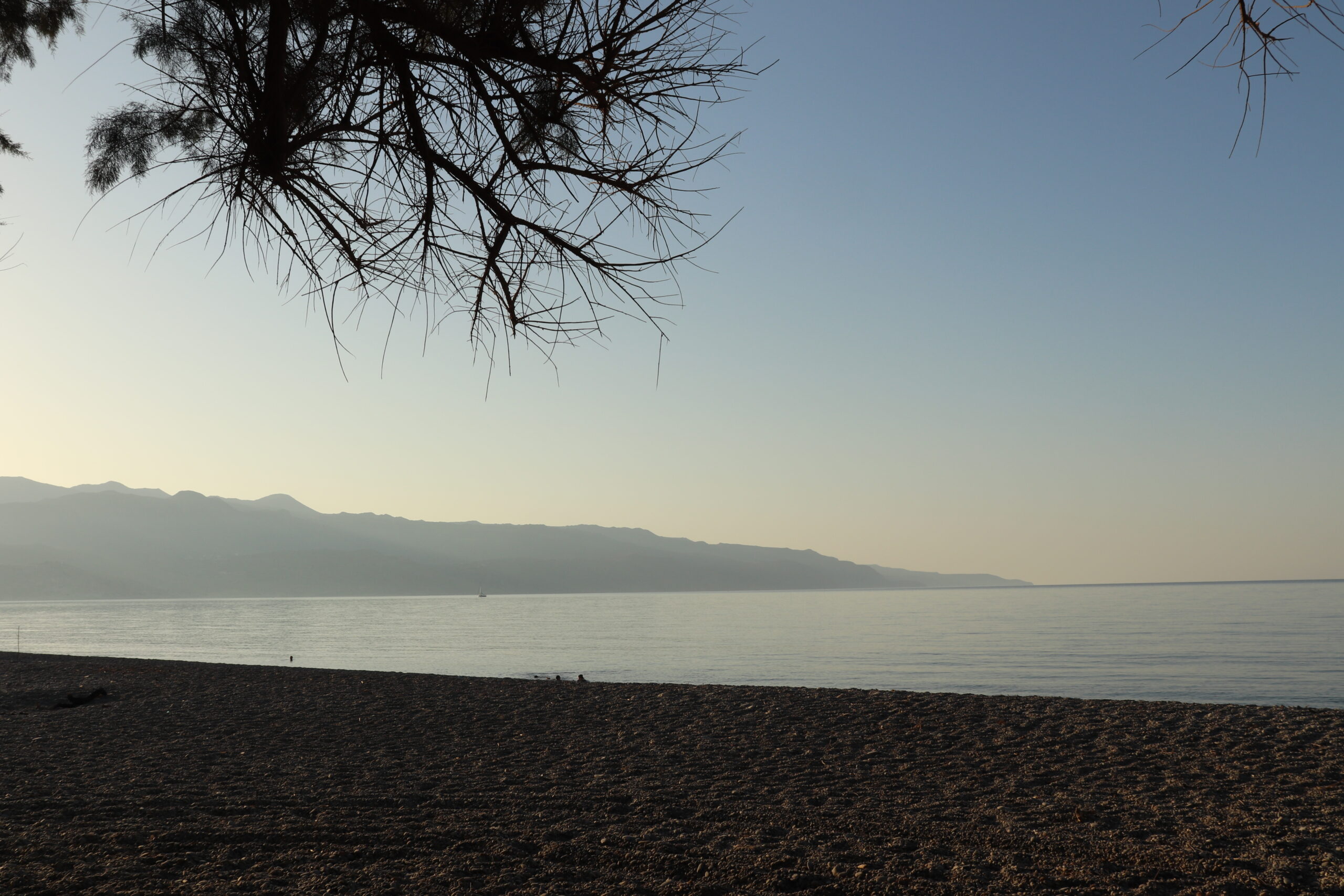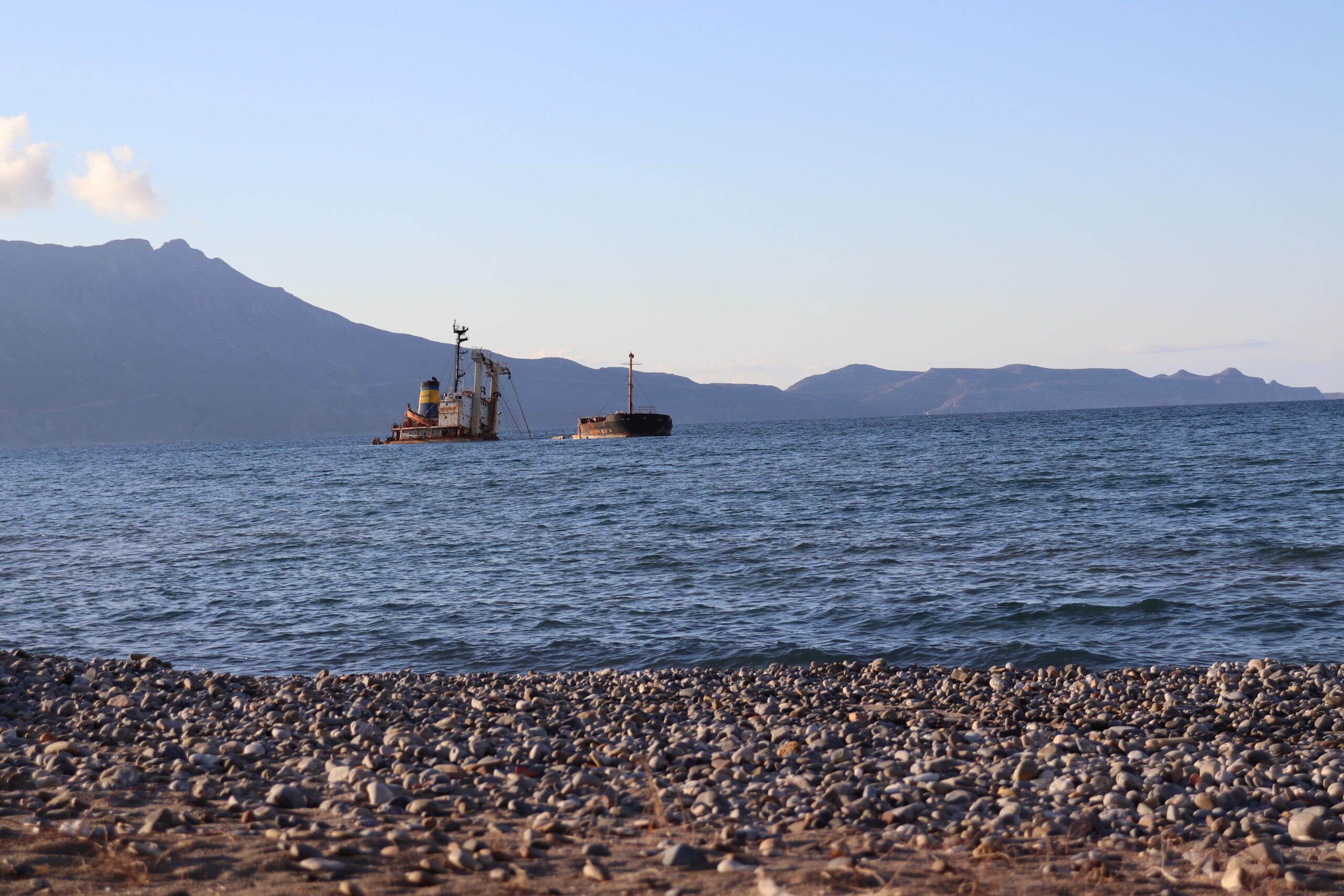
Kato Zakros Beach lies at the far eastern edge of South Lasithi, positioned directly in front of the small coastal settlement of Kato Zakros. Unlike the wide sandy bays of Xerokampos, this beach is defined by its archaeological and geological surroundings.
Setting & Landscape
The beach sits at the exit of Zakros Gorge and near the archaeological site of the Minoan Palace of Zakros. The surrounding cliffs and dry terrain create a dramatic but compact visual frame.
The atmosphere feels isolated and structured rather than open and expansive.
Surface & Shoreline
The shoreline consists primarily of pebbles and small stones. Sand presence is minimal.
This surface keeps the water clear but may require water shoes for comfort.
Water Entry & Swimming
Entry into the sea is moderate. Depth increases steadily but not abruptly.
Swimming conditions depend on wind direction. Because the beach faces open water, wave activity can increase during stronger southern winds.
Wind Exposure
The bay is partially framed by surrounding terrain but remains open toward the Libyan Sea. It is less exposed than Long Beach but not fully sheltered like enclosed coves.
Facilities
- Small tavernas along the waterfront
- Limited organized sunbeds in peak season
- No large-scale beach bars or resorts
The environment remains simple and low-density.
Parking & Access
Access requires driving through mountain terrain from Sitia or Xerokampos direction. The road is paved but includes curves.
Parking is available near the beach and rarely becomes congested.
Shade Conditions
Natural shade is minimal. Some limited shade may exist near tavernas.
Who This Beach Suits
- Travelers combining hiking and swimming
- Visitors interested in archaeology
- People seeking quiet eastern coastline
Who Might Prefer Another Beach
- Families seeking sandy shallow entry
- Travelers wanting large open beaches
- Visitors needing full infrastructure
Best Time of Day
Morning provides calmer conditions and lower density, especially for visitors finishing a gorge hike.
Final Assessment
Kato Zakros Beach offers context rather than scale. Its strength lies in location — the combination of history, geology, and quiet shoreline.
Combining Zakros Gorge, the Palace, and the Beach
Kato Zakros Beach functions differently from most south coast beaches because it is rarely visited as a standalone swimming destination. For many travelers, it represents the final stage of a combined experience.
The Zakros Gorge (“Gorge of the Dead”) ends directly near the coastline. Hikers often arrive dusty and warm, making the beach a natural extension of the walk. The transition from narrow gorge walls to open sea horizon creates a strong visual contrast.
Just inland lies the Minoan Palace of Zakros, one of the four major Minoan palace complexes in Crete. Visiting the archaeological site before or after swimming changes the rhythm of the day. The beach becomes part of a historical landscape rather than an isolated relaxation point.
Because of this layered structure, visitor flow tends to follow a pattern: morning hike, mid-day swim, late lunch at a waterfront taverna. The beach rarely develops high-density lounging zones like Makry Gialos or Long Beach.
Kato Zakros works best when understood as a cultural and geographic endpoint — a place where hiking, archaeology, and swimming intersect in a compact, remote setting.