How much money do you need per day in Crete?
For an independent holiday, a useful starting point is around
€65 per person on a tight budget, €120 for a comfortable mid-range trip, or €250 and above for a higher-end stay
.
Before choosing a budget:
The €120 and €250 examples assume two adults sharing accommodation. The €65 example assumes a very inexpensive bed or shared accommodation, which may not be available for your dates. If you travel alone and want a private room, allow more.
These are example budgets, not fixed prices. Your actual spending will depend on when you travel, where you stay, whether you share accommodation, and how you get around the island.
It’s easy to budget for food and sightseeing while overlooking accommodation, transport and the occasional expensive day trip.
Below, we’ll build a daily budget that includes all four, then look at what a week in Crete might cost for a couple.
For a broader breakdown of holiday expenses, see our
Crete Travel Costs guide
.
How Much Does Crete Cost Per Day?
Here are three example budgets for one adult travelling in Crete.
Budget — €65 per person/day
- Accommodation: €30
- Food and drinks: €25
- Transport: €5
- Activities and extras: €5
- Total per person: €65
Mid-range — €120 per person/day
- Accommodation: €55
- Food and drinks: €35
- Transport: €20
- Activities and extras: €10
- Total per person: €120
Higher-end — €250 per person/day
- Accommodation: €130
- Food and drinks: €65
- Transport: €30
- Activities and extras: €25
- Total per person: €250
These are illustrative budgets, not verified quotes for specific hotels, restaurants, or rental cars.
The accommodation costs in these examples assume different types of accommodation.
The budget example assumes an inexpensive bed or similarly low-cost shared arrangement. The mid-range and higher-end examples assume two adults sharing a room, with each paying half the accommodation cost.
Transport costs are averaged across the trip, so you might spend nothing on one day and considerably more on another.
The totals exclude flights to Crete, travel insurance, and major shopping expenses. They also exclude any accommodation-related taxes or fees not already included in the quoted room price.
Which budget should you choose?
-
Around €65 per person:
You are happy with very simple accommodation, affordable food, buses, walking, and mostly free activities. Check accommodation availability before relying on this figure. -
Around €120 per person:
You share a comfortable room, enjoy regular restaurant meals, do some sightseeing, and use a mixture of transport options. -
€250 or more per person:
You share higher-end accommodation and prefer more expensive restaurants, private transport, or additional paid experiences.
These examples are a starting point. In July and August, you may need a higher accommodation and transport allowance.
Travelling alone?
If you want your own room, calculate its full nightly price rather than using the shared-room allowance above.
What Does a Week in Crete Cost for Two People?
A couple sharing a room can share some costs, especially accommodation and car rental. Food, entrance tickets, and individual activities usually still cost money for each person.
Using the daily examples above:
Budget
- Two people per day: €130
- Seven days: €910
Mid-range
- Two people per day: €240
- Seven days: €1,680
Higher-end
- Two people per day: €500
- Seven days: €3,500
These totals include seven nights of accommodation, seven days of food and local transport, and the activity allowances shown above.
They do
not
include flights, travel insurance, or unusual one-off expenses.
For example, a couple planning a mid-range week could use €1,680 as an initial estimate, then replace the accommodation and transport figures with actual prices for their travel dates.
A couple travelling in August and renting a car for the whole week may spend more. Another couple staying in a reasonably priced apartment, walking to the beach, and cooking some meals may spend less.
The most reliable approach is to price your accommodation first.
It is usually the largest single expense and one of the most sensitive to season and location.
How Much Should You Budget for Accommodation in Crete?
Accommodation can make the difference between an affordable holiday and a surprisingly expensive one.
Crete offers hostel beds, family-run rooms, self-catering studios, apartments, hotels, villas, and resorts. But the price of a room depends on much more than its category.
A simple apartment near the beach in August may cost more than a comfortable hotel room in a quieter area in May.
When comparing places to stay, check:
-
Total price for your dates:
Not just the advertised nightly rate. -
Number of guests:
Is the price for one person, two people, or the entire apartment? -
Location:
Can you walk to restaurants, shops, and the beach, or will you need transport every day? -
Kitchen facilities:
Preparing breakfast or occasional meals can reduce food costs. -
Extra charges:
Check applicable taxes, cleaning fees, parking, and cancellation terms.
A cheaper room outside town is not necessarily a cheaper holiday if it means paying for taxis or renting a car throughout your stay.
Compare Hotels and Apartments Before Setting Your Budget
Once you know your approximate travel dates, compare the total cost of different accommodation types rather than choosing only by the nightly price.
A centrally located apartment with a kitchenette may suit a couple trying to control food and transport costs. A hotel with breakfast included might offer better value if you prefer not to cook.
Accommodation comparison — Trip.com
Compare hotels, apartments, and other available accommodation for your dates. Check the final price, location, included facilities, and cancellation conditions before booking.
How Much Should You Budget for Food in Crete?
Food spending is one of the easiest parts of your daily budget to adjust.
A traveller who buys breakfast from a bakery, has a simple lunch, and eats at a local taverna in the evening will usually spend less than someone who orders three restaurant meals every day.
For initial planning, consider these daily food allowances per person:
Bakery breakfast, simple meals, some self-catering
- Example daily allowance: €20–25
Casual restaurants and tavernas
- Example daily allowance: €30–40
More restaurant meals, drinks, and higher-priced dining
- Example daily allowance: €50–70+
These are suggested spending allowances, not fixed menu prices.
If your accommodation includes breakfast, avoid counting breakfast twice. If you book an all-inclusive resort, some or most meals may already be included in the room price.
Drinks, desserts, and waterfront dining can also increase your total more than expected.
For a closer look at meals and restaurant prices, see our
Cost of Food in Crete
guide.
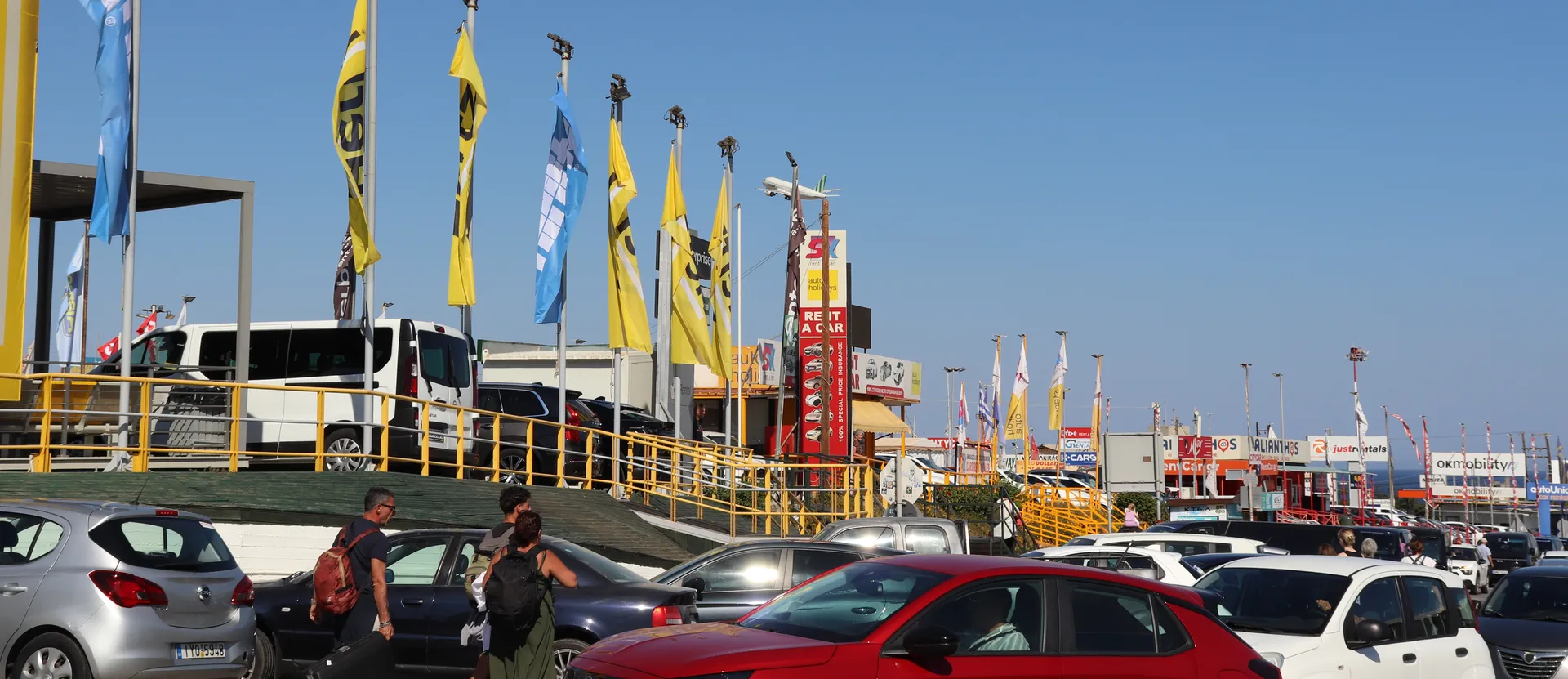
Is It Cheaper to Use Buses or Rent a Car in Crete?
That depends on where you stay and what you want to see.
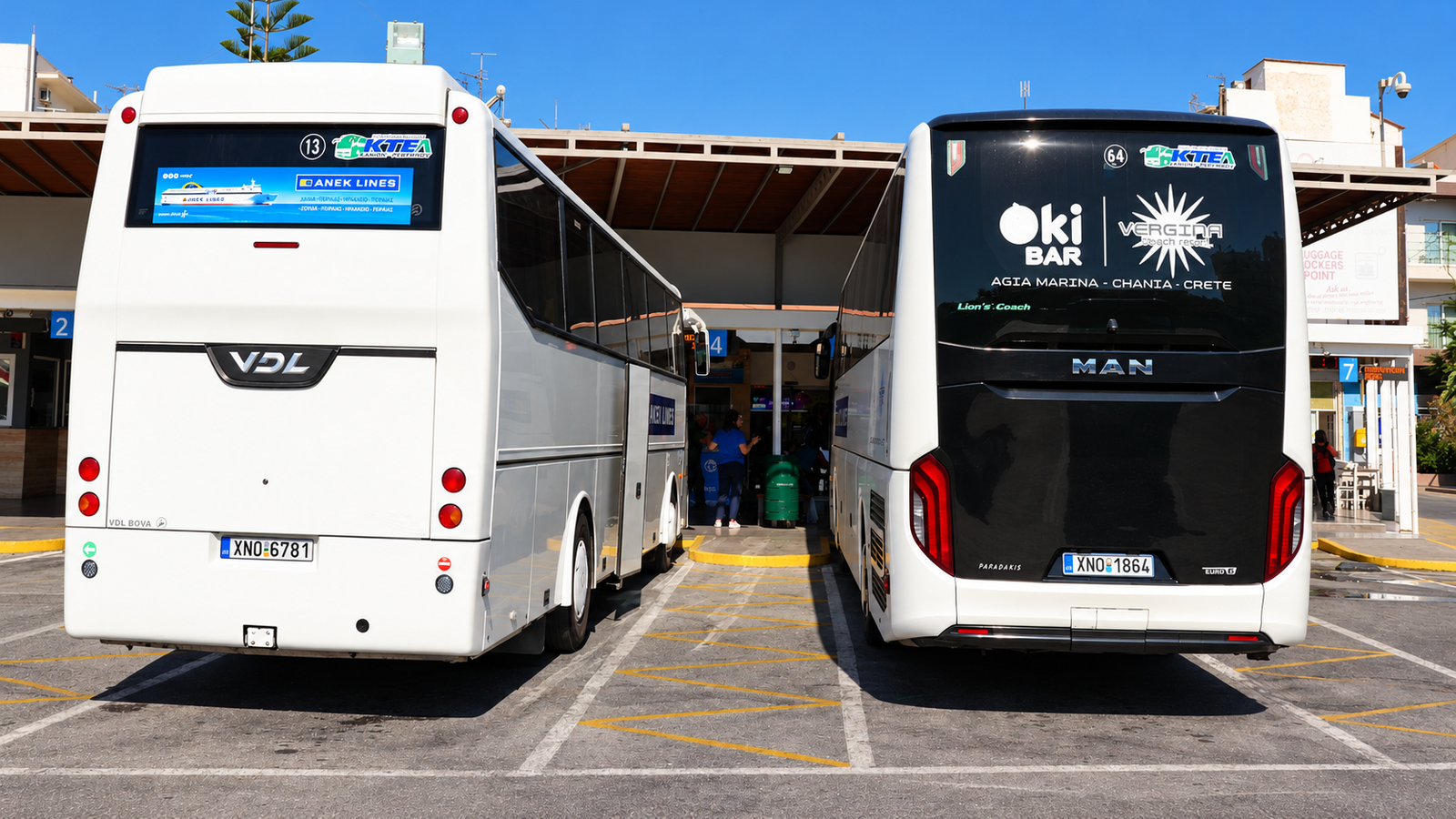
If your holiday is based in Chania, Rethymno, or Heraklion, and you mainly want to explore the town and nearby accessible beaches, walking and public buses may keep your transport budget low.
But Crete is a large island. If your plans include several remote beaches, mountain villages, or places with limited public transport, a rental car may give you more flexibility.
Example: A Couple Comparing Transport Costs
Imagine two people staying in one town for seven days.
Option A: Buses and walking
They spend most days near their accommodation, use local buses for some outings, and plan one or two longer journeys.
Their total transport cost will depend on how often they use buses and how far they travel.
Option B: A Rental Car
They want to explore several areas independently.
For a sample calculation, suppose their car rental costs €40 per day and they allow another €15 per day for fuel and other driving expenses.
That gives:
- Car rental: €40 × 7 = €280
- Fuel and driving allowance: €15 × 7 = €105
-
Total example: €385 for the couple
-
Equivalent: €27.50 per person per day
This is an example calculation, not an actual car rental quote. Insurance coverage, excess, deposits, parking, fuel consumption, and seasonal pricing must be checked separately.
Important:
The €120 mid-range daily budget includes a €20 transport allowance per person. Renting a car every day at the example cost above would increase that allowance by €7.50 per person per day, bringing the illustrative daily total to
€127.50
, assuming all other expenses remain unchanged.
A car is not automatically the cheaper choice. However, it may be more useful for a trip with several destinations that would otherwise require separate transfers or organised excursions.
Compare Rental Car Prices for Your Dates
Before deciding whether to rent a car, compare the total price for the days you actually need it.
You may find that renting for two or three sightseeing days suits your itinerary better than paying for a car throughout a beach holiday.
Check the insurance terms, excess, deposit, fuel policy, pickup location, and driver requirements before choosing an offer.
Car rental comparison
How Much Should You Allow for Activities and Day Trips?
Not every day in Crete needs a paid activity.
Walking through an old town, spending time on a public beach, and exploring nearby villages can cost very little beyond transport and food.
Other days may include museum tickets, archaeological sites, boat trips, guided excursions, or organised activities.
Rather than assuming you will spend the same amount every day, build an activity allowance for your entire stay.
For example, a couple might set aside €140 for activities over seven days. That works out to €10 per person per day on average.
They could spend nothing on several days and use the money for one or two paid experiences.
If a particular excursion is essential to your holiday, check its actual price and add it separately. Do not assume a small general activity allowance will cover an expensive boat trip or private tour.
How to Do Crete on a Budget Without Missing Out
Travelling on a budget does not have to mean skipping the places you came to see.
The important thing is to decide where spending more genuinely improves your trip.
Choose accommodation that reduces transport costs.
A slightly more expensive room within walking distance of the beach and restaurants may save money overall.
Use buses where they fit your itinerary.
You do not need a rental car every day simply because Crete is a large island.
Mix restaurants with simpler meals.
A bakery breakfast or a self-catered lunch leaves more room in the budget for a good taverna dinner.
Plan expensive excursions before arriving.
Check what is included in the price and whether you need to pay separately for entrance tickets or transport.
Consider travelling outside July and August.
May, June, September, and parts of October may offer more attractive accommodation prices, although the weather, sea conditions, and availability of tourist services differ by month.
Leave room for unexpected expenses.
A budget with no flexibility can become stressful after one taxi ride, an extra excursion, or a change of plans.
The aim is not to spend the absolute minimum. It is to spend money on the parts of Crete you most want to experience.
How Much Spending Money Do I Need for Crete?
This is a different question from your total daily holiday budget.
If you have
already paid for your accommodation
, you should not include that cost again when calculating how much spending money to bring.
For example, suppose your hotel is prepaid and you want a comfortable but fairly simple holiday.
You might allow per person, per day:
Daily spending money — €65 per person/day
- Food and drinks: €35
- Local transport: €15
- Activities and extras: €15
- Daily spending money: €65
For seven days, that is
€455 per person
, excluding accommodation and flights.
If you have also prepaid breakfast, car rental, or excursions, adjust the calculation to avoid counting those expenses twice.
You do not need to carry your entire holiday budget as cash. The important distinction is between your planned spending and how you intend to pay.
Does the Time of Year Change Your Daily Budget?
Yes, particularly for accommodation and car rental.
July and August
generally bring stronger demand for popular resorts and rental cars. A budget based on spring prices may not be enough for peak summer.
May, June, September, and October
can offer better value, depending on the exact dates and location.
Winter
may have lower accommodation prices in some areas, but it is not simply a cheaper version of a summer holiday. Seasonal hotels, excursions, and tourist services may be closed or limited.
For accurate planning, compare prices for your actual travel dates rather than relying on a single year-round daily average.
How to Build Your Own Crete Daily Budget
You can make a more useful estimate in a few minutes.
Start with your accommodation quote and calculate the cost per person per night.
Then add a realistic daily food allowance, the transport you expect to use, and a total allowance for paid activities.
For example:
A couple planning seven nights:
- Accommodation: €770 total
- Food: €70 per day for two people × 7 = €490
- Transport: €280 total
- Activities: €140 total
Estimated holiday total: €1,680 for two people.
That is
€840 per person for seven days
, or
€120 per person per day
.
This example excludes flights, travel insurance, and unpriced extra charges. It assumes the couple shares accommodation and transport costs.
Replace the sample numbers with your actual hotel and transport quotations, and you will have a budget tailored to your trip.
Frequently Asked Questions
Is €100 a Day Enough for Crete?
It can be, especially if you share accommodation and choose reasonably priced meals and transport. But €100 per person may be restrictive for a peak-season trip with expensive accommodation, daily car rental, and several paid excursions.
Can You Visit Crete Without Renting a Car?
Yes. Staying in a well-connected town and using buses can work well for many holidays. A car becomes more useful when your itinerary includes remote locations or several places that are difficult to reach by public transport.
Is Crete Expensive for Tourists?
Crete offers options across different price ranges. A simple holiday based around local food, public transport, and affordable accommodation can cost considerably less than a resort stay with private transfers and organised activities.
The best comparison is not whether Crete is universally cheap or expensive, but what your preferred style of holiday will cost.
Should I Book Accommodation Before Planning My Daily Budget?
You can estimate a budget first, but check accommodation prices before relying on the final number. Your hotel or apartment choice can change the total substantially.
Final Advice: Start With the Costs You Can Control
A useful Crete travel budget is not just a daily number.
It is a combination of accommodation, meals, transport, activities, and the time of year.
For a first estimate, use
€65, €120, or €250+ per person per day
, depending on your travel style and accommodation arrangements. Then replace those examples with prices for your own dates and plans.
If you want to keep costs down, make your biggest decisions first: where to stay, whether you need a car, and which paid experiences matter most.
That way, your budget will reflect your own plans rather than general estimates.