If you want to understand how the island is structured, start with the main Crete Regions Explained guide which introduces the four main regions of Crete.
East Crete refers to the eastern part of the island and is often described as one of the most scenic and relaxed areas of Crete. Compared with the western regions, the landscapes here feel more open and less crowded.
The region includes coastal towns, wide bays, agricultural valleys, and mountain landscapes that extend toward the eastern edge of the island.
Where East Crete Is Located
The eastern part of Crete begins beyond the central regions around Heraklion and continues toward the easternmost points of the island. Much of this area falls within the Lasithi region.
The coastline here forms several large bays and peninsulas, creating a variety of coastal environments.
As travelers move further east, the landscape gradually becomes more rugged and sparsely populated.
Agios Nikolaos and Mirabello Bay
One of the main towns in East Crete is Agios Nikolaos. Built around a small lake connected to the sea, the town offers a distinctive waterfront setting.
The surrounding Mirabello Bay is one of the largest bays in Crete and provides calm coastal scenery with views across the water toward surrounding hills.
This area often serves as a base for exploring eastern Crete.
Coastal Landscapes
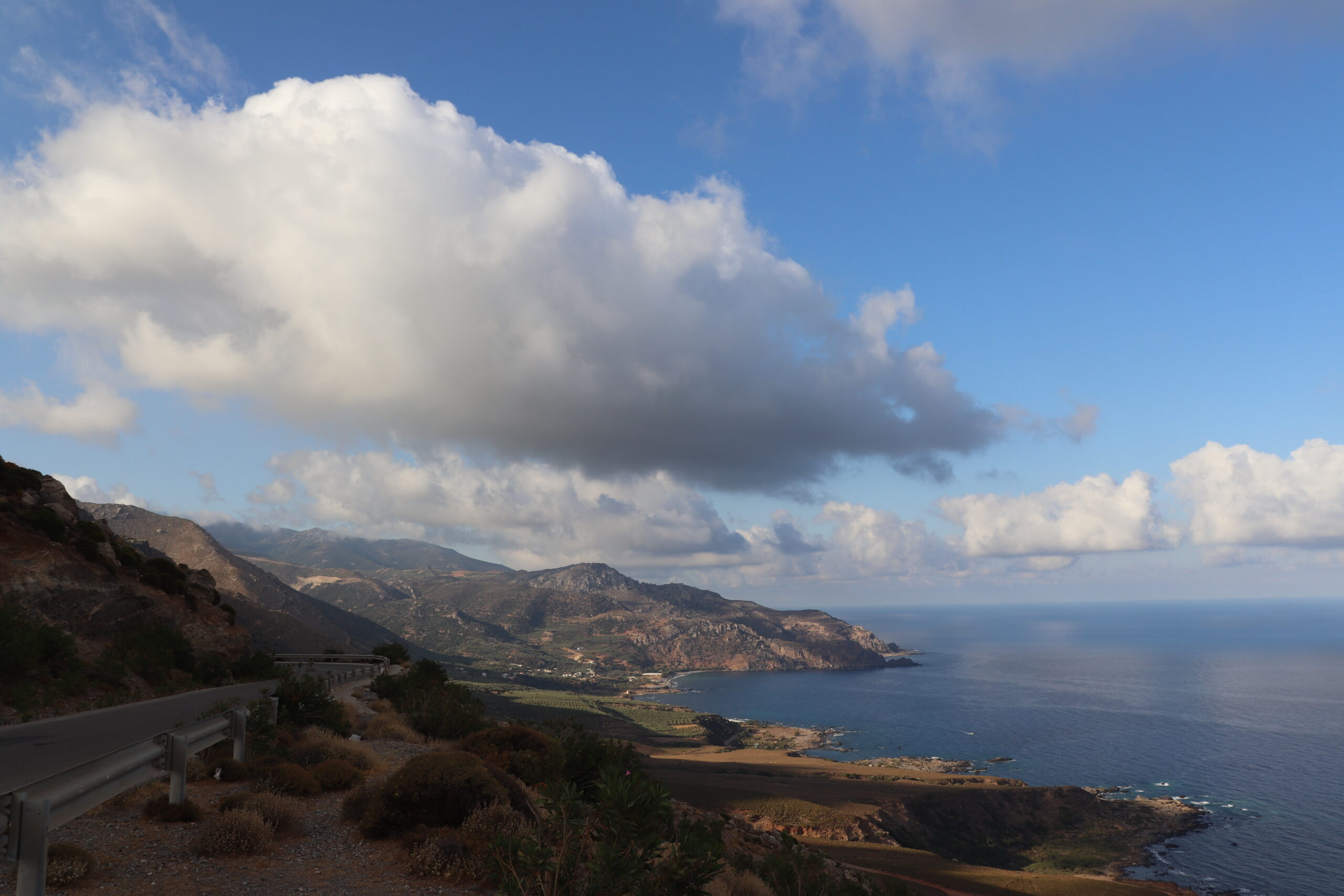
The coastline of East Crete includes long stretches of open shorelines as well as smaller coves and bays. Coastal roads follow the curves of the land, connecting towns and villages along the sea.
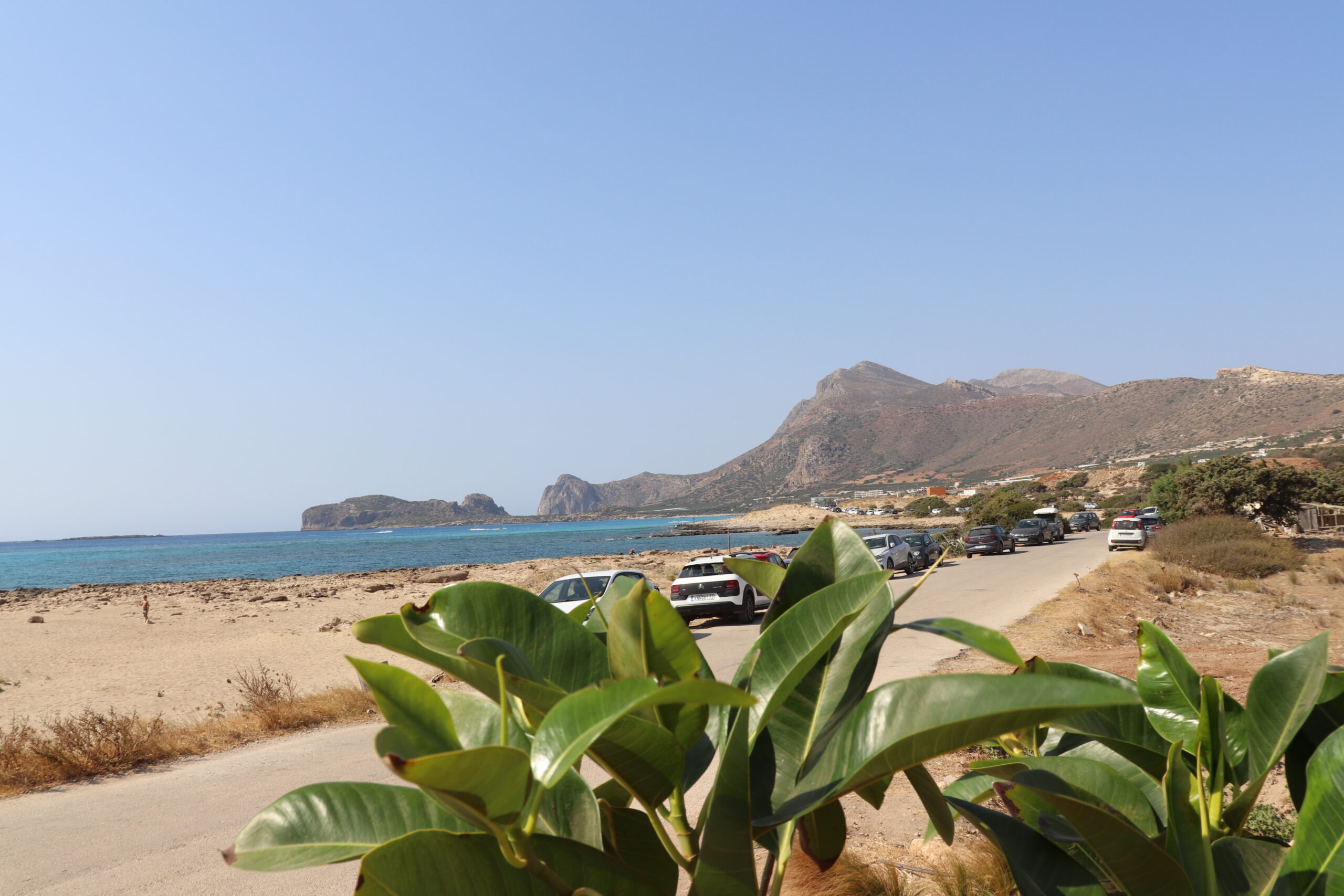
Many beaches in this region are located within quiet natural settings rather than large resort areas.
This contributes to the calmer atmosphere often associated with the eastern side of the island.
The Lasithi Plateau
One of the most distinctive landscapes of East Crete lies inland from the coast. The Lasithi Plateau forms a large highland plain surrounded by mountains.
The plateau has been used for agriculture for centuries. Small villages and farmland are scattered across the flat land, while mountain ridges form a dramatic natural boundary around the plain.
This landscape contrasts strongly with the nearby coastline.
The Eastern Edge of the Island
The far eastern part of Crete becomes increasingly wild and less developed. Coastal cliffs, rugged hills, and remote beaches characterize the landscape.
Travelers exploring the easternmost parts of the island often find quiet villages and natural scenery that feel far removed from busy tourist centers.
This part of the island offers a very different travel environment compared with the more developed western regions.
A Slower Travel Atmosphere
Many visitors describe East Crete as having a slower rhythm of travel. Towns are generally smaller, and tourism tends to be less concentrated.
This relaxed atmosphere attracts travelers who prefer scenic landscapes, coastal towns, and a quieter environment.
Final Thoughts
East Crete offers a distinctive perspective on the island. Open landscapes, quiet coastal towns, and mountain plateaus combine to create a region that feels spacious and calm.
For travelers looking to experience a more relaxed side of Crete, the eastern part of the island provides a unique and memorable environment.