If you want to understand how the island is structured, start with the main Crete Regions Explained guide which introduces the four main regions of Crete.
The south coast of Crete stretches along the island’s southern edge facing the Libyan Sea. Compared with the northern coastline, this part of the island is generally quieter and less developed.
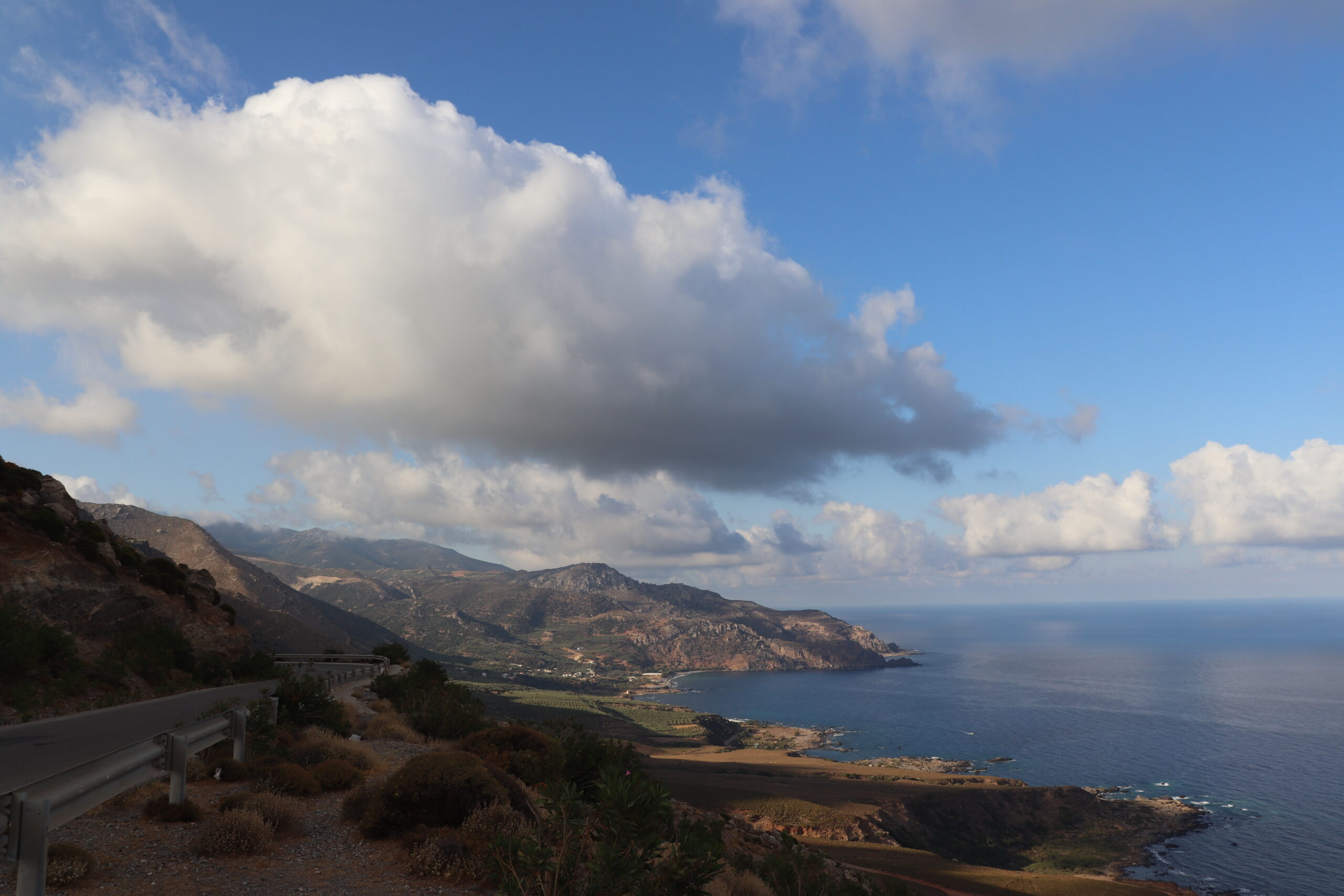
Mountains dominate the landscape across Crete, and in many places these mountain ranges descend directly toward the southern shoreline. This geography creates dramatic scenery where steep slopes meet the sea.
Where the South Coast Is Located
The southern coast runs across the entire lower edge of Crete, from the western areas of the Chania region through the southern parts of Rethymno and Heraklion before reaching the eastern areas of Lasithi.
Because of the mountains that separate the northern and southern sides of the island, travel routes to the south often follow winding roads that cross the interior landscapes.
This natural separation contributes to the more remote feeling of the southern coastline.
Landscape and Geography
The landscapes of southern Crete are often rugged and dramatic. Cliffs, rocky hills, and narrow coastal plains shape much of the shoreline.
In several areas the mountains rise directly behind the coast, leaving only small stretches of flat land where villages have developed.
This geography creates striking views where mountains, valleys, and the sea meet.
Coastal Villages
Small villages are scattered along the southern coast of Crete. Many of these settlements developed as fishing communities or agricultural villages connected to nearby valleys.
The pace of life in these places tends to be slower than in the larger towns along the northern coast. Visitors often notice a quieter atmosphere and fewer large tourist developments.
These villages provide a glimpse into traditional coastal life on the island.
Beaches of the Southern Coast
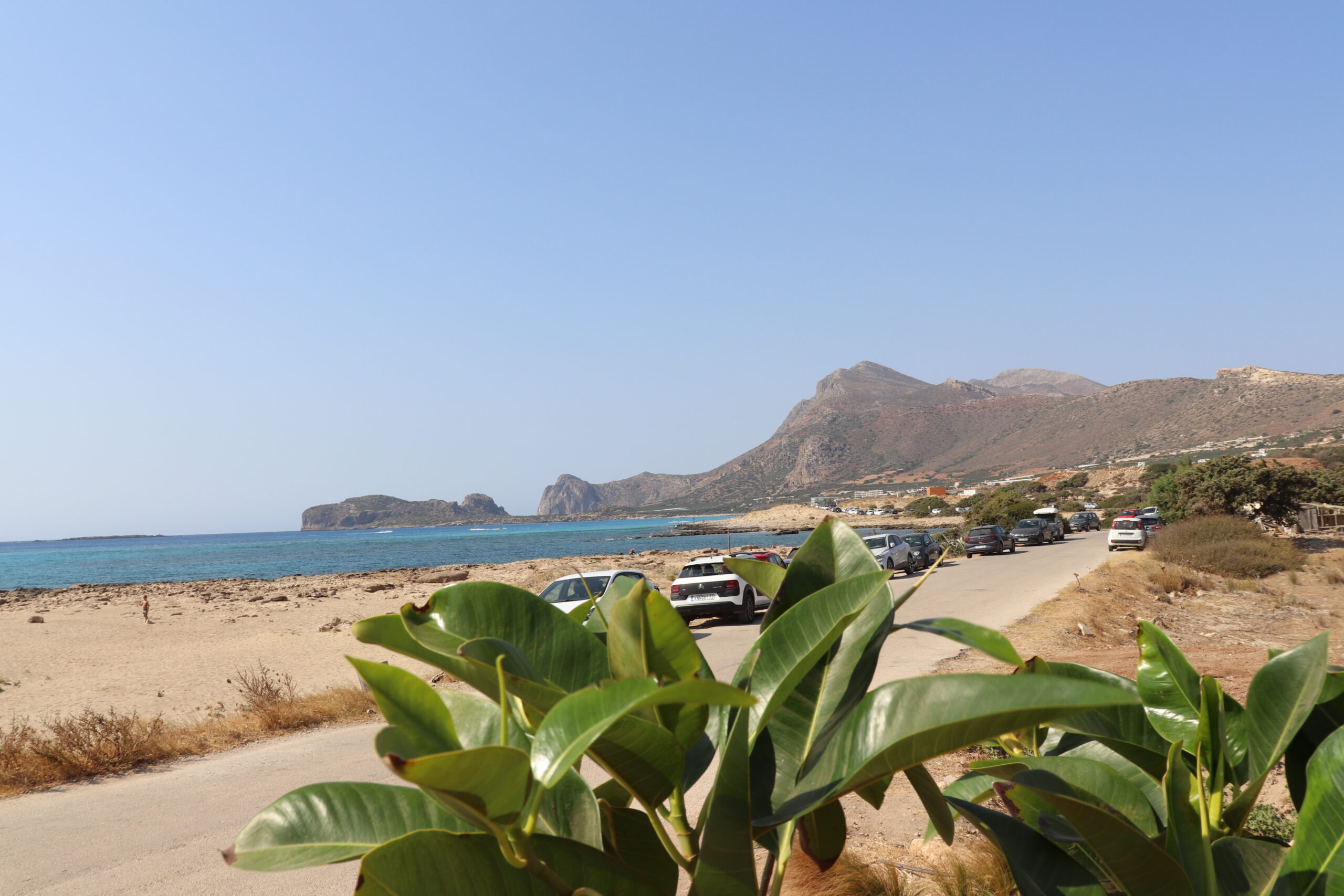
Beaches along the southern side of Crete often differ from those found along the north coast. Many are located in natural settings surrounded by mountains or cliffs.
Some beaches appear at the end of narrow valleys where rivers meet the sea, while others lie beneath steep rocky slopes.
The more remote nature of the southern coast means that many beaches remain relatively quiet.
Access Across the Mountains
Reaching the south coast usually requires crossing the mountain ranges that run through the island. Roads often follow valleys or mountain passes before descending toward the sea.
These routes provide scenic views across the interior landscapes of Crete.
Although travel times can be longer than along the northern highway, the journey itself often becomes part of the experience.
A Different Atmosphere
The southern side of Crete offers a different rhythm compared with the busier northern coastline. Smaller settlements, natural landscapes, and quieter beaches create a calmer environment.
Many travelers who explore the south coast appreciate the contrast between this peaceful atmosphere and the larger towns of the north.
Final Thoughts
The south coast of Crete reveals a more rugged and tranquil side of the island. Mountains, valleys, and small coastal villages combine to form a landscape that feels both dramatic and peaceful.
For visitors interested in exploring beyond the main travel routes, the southern coastline offers a unique perspective on Crete.