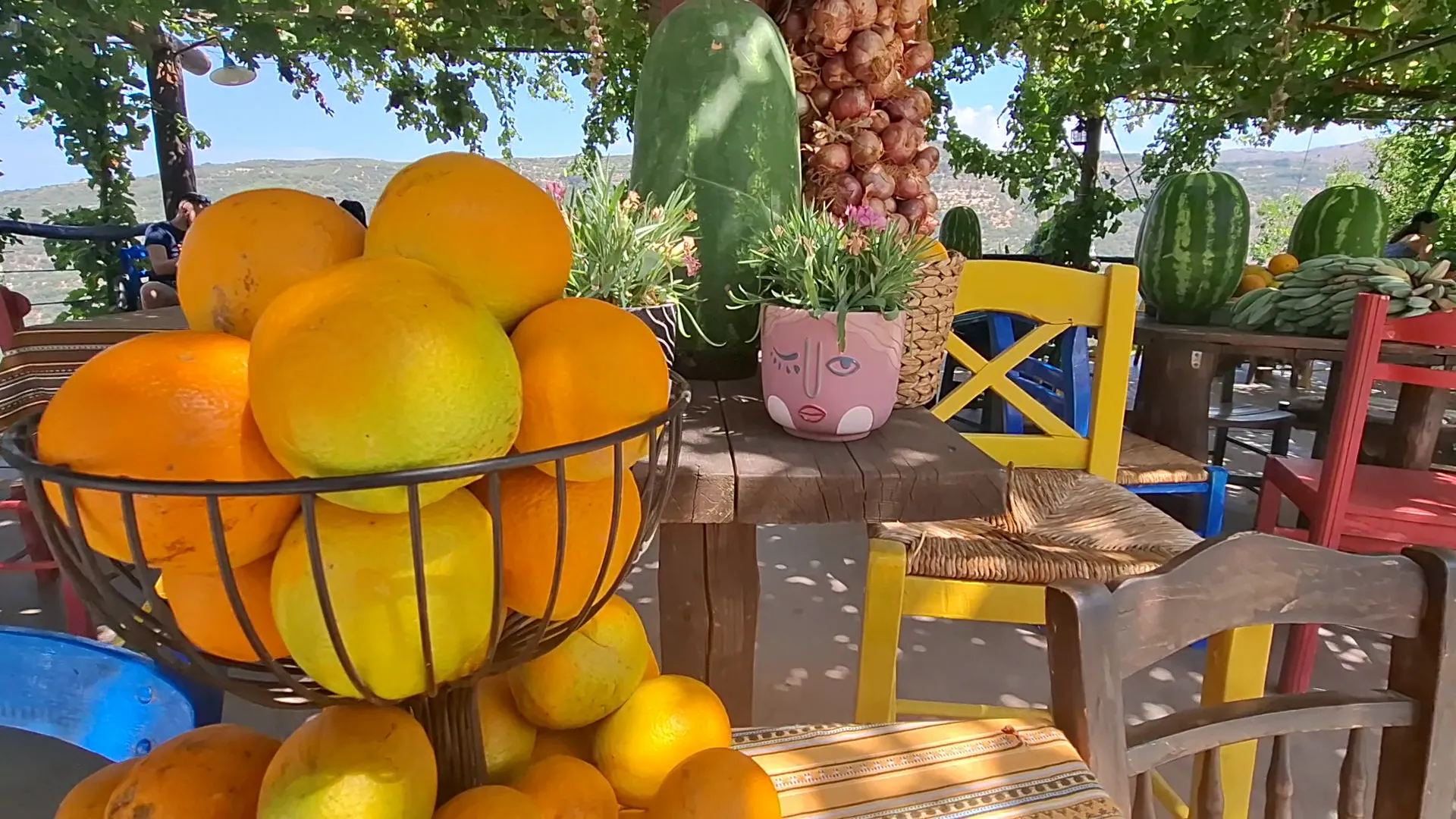
If you want to explore local cuisine during your trip, start with the main Crete Food Guide to understand how food culture works on the island.
Crete has one of the most distinctive culinary traditions in Greece. The island’s cuisine is closely connected to the Mediterranean diet and relies heavily on fresh local ingredients.
Olive oil, vegetables, herbs, seafood, and traditional cheeses form the foundation of many dishes. Meals in Crete are often simple but rich in flavor, reflecting centuries of local farming and cooking traditions.
The Mediterranean Diet
Cretan cuisine is often associated with the Mediterranean diet, which became internationally famous for its health benefits.
Traditional Cretan cooking focuses on natural ingredients and balanced meals.
- Fresh vegetables
- Olive oil as the main cooking fat
- Wild herbs and greens
- Grilled meat and seafood
This approach to food has been part of everyday life on the island for generations.
Olive Oil
Olive oil is one of the most important ingredients in Cretan cuisine. The island produces large quantities of high-quality olive oil, which is used in nearly every dish.
Many families still harvest olives and produce oil locally.
Olive oil is used for cooking, salads, vegetables, and bread.
Traditional Cretan Dishes
Crete is known for several traditional dishes that represent the island’s culinary identity.
These dishes are often prepared using simple ingredients but traditional methods.
- Dakos – barley rusk with tomato, olive oil, and cheese
- Gamopilafo – traditional rice dish cooked with meat broth
- Kalitsounia – small pastries filled with cheese or herbs
- Antikristo lamb – slow roasted lamb cooked over open fire
Many of these dishes are served in local tavernas across the island.
Cretan Cheese
Cheese is another important part of the island’s food culture. Many traditional cheeses are made from sheep or goat milk.
Popular Cretan cheeses include:
- Mizithra
- Graviera
- Anthotyro
These cheeses are used in salads, pies, and desserts.
Fresh Seafood
Crete’s long coastline provides access to fresh seafood. Fish and seafood are common in coastal restaurants.
Many tavernas serve grilled fish prepared with olive oil, lemon, and herbs.
Seafood dishes are often simple and focus on natural flavors.
Wild Greens and Herbs
Wild greens known as “horta” are a traditional part of the Cretan diet. These greens grow naturally across the island’s countryside.
They are usually boiled or lightly cooked and served with olive oil and lemon.
Wild herbs such as oregano and thyme are also widely used in local cooking.
Cretan Wine and Local Drinks
Crete has a long history of wine production. Local vineyards produce several varieties of wine that pair well with traditional dishes.
Another well-known local drink is raki, a traditional grape spirit often served after meals.
Sharing a drink after dinner is a common part of Cretan hospitality.
Summary
Crete is famous for a cuisine that combines simple ingredients with traditional Mediterranean cooking methods. Olive oil, vegetables, cheeses, seafood, and herbs form the foundation of many local dishes.
Meals in Crete are often relaxed and social, reflecting the island’s lifestyle and cultural traditions.
Exploring local food is one of the most rewarding ways to experience Crete and understand the island’s culture.