If you want to understand the variety of coastal landscapes across the island, start with the main Crete Beaches by Type guide to explore how different beaches form around Crete.
Quick Answer
The most reliable wind-protected beaches in Crete are usually located inside enclosed bays, behind rocky headlands, or on coastlines facing away from the prevailing wind.
During the common northern and northwestern summer winds, useful options include Marathi, Tersanas, Agioi Apostoli, Bali, Agia Pelagia, Limanakia, Elounda, and Makry Gialos. Conditions still depend on the exact wind direction, wind strength, and wave height on the day.
What Is the Meltemi Wind?
The Meltemi is a seasonal northern or northwestern wind that commonly affects Crete during summer, particularly in July and August. It can create strong wind, waves, and difficult swimming conditions along exposed coastlines.
Its effect is not identical across the island. Enclosed bays, south-facing beaches, rocky headlands, and mountain barriers may provide better protection, but conditions still depend on the exact wind direction and strength.
Wind-Protected Beaches in Crete at a Glance
| Beach | Region | Usually Protected From | Main Limitation |
|---|---|---|---|
| Marathi | Chania | Northern and northwestern summer winds | Popular and crowded during summer |
| Tersanas | Chania | Common northern summer winds | Small beach with limited space |
| Agioi Apostoli | Chania | Northern and northwestern winds | Protection differs between the separate coves |
| Loutraki | Chania | Northern and northwestern winds | Can become busy during peak season |
| Stavros inner bay | Chania | Common summer winds | The nearby outer beach is more exposed |
| Bali coves | Rethymno | Northern and northwestern winds | Protection varies between individual coves |
| Panormo | Rethymno | Northern winds | The harbour coves offer the best protection |
| Kalypso | Rethymno | Direct wind from several directions | Rocky setting and deep water |
| Damnoni and Ammoudaki | Rethymno | Typical northern winds | Local gusts remain possible |
| Agia Pelagia | Heraklion | Northern and northwestern winds | Water becomes deep in parts of the bay |
| Ligaria | Heraklion | Northern and northwestern winds | Small beach that fills quickly |
| Limanakia / Sarantari | Heraklion | Northern winds and open-sea waves | Small coves with limited space |
| Paleokastro | Heraklion | Northern winds | Only relatively protected; water deepens quickly |
| Agiofarago | Heraklion | Typical northern winds | Remote access and possible gorge gusts |
| Elounda | Lasithi | Northern and northwestern winds | Conditions vary around the wider gulf |
| Kolokytha | Lasithi | Northern and northwestern winds | Small and crowded; easterly weather can affect it |
| Agriomandra | Lasithi | Common northern summer winds | Remote beach with difficult access |
| Makry Gialos | Lasithi | Northern winds | Strong southern winds can reverse conditions |
| Kato Zakros | Lasithi | Western and northwestern winds | More exposed during easterly weather |
Wind-Protected Beaches in Chania
Marathi and Loutraki sit inside Souda Bay on the southern side of the Akrotiri Peninsula. Their position provides useful protection when northern and northwestern winds affect more exposed beaches around Chania.
Tersanas is hidden inside a small bay, while Agioi Apostoli consists of several separate coves. At Agioi Apostoli, visitors can choose the cove facing away from the day’s wind.
The inner bay at Stavros is protected by the surrounding mountain. This applies to the main enclosed swimming area, not automatically to the more exposed beach nearby.
Wind-Protected Beaches in Rethymno
Bali contains several beaches inside a deeply indented coastal area. Karavostasis, Limani, Varkotopos, and Livadi do not provide identical protection, so conditions should be checked for the individual cove.
Panormo also has small harbour beaches offering better protection than the long open beaches around Rethymno.
On the south coast, Kalypso is enclosed by high rock walls. Damnoni and Ammoudaki can provide calmer water during northern winds, although local gusts around the wider Plakias area remain possible.
Wind-Protected Beaches in Heraklion
Agia Pelagia is located inside a deep bay protected from the northern and northwestern winds that commonly create waves along the central north coast. Nearby Ligaria offers another compact cove with useful natural protection.
Limanakia, also known as the Sarantari coves, consists of several small swimming areas protected by Cape Sarantaris. These coves often remain calmer when nearby open beaches around Hersonissos become rough.
Paleokastro is relatively protected from northern winds but becomes deep quickly. Agiofarago is surrounded by high gorge walls, although reaching the beach requires walking and strong local gusts remain possible.
Wind-Protected Beaches in Lasithi
Elounda benefits from the enclosed geography of the gulf and surrounding peninsulas. Kolokytha is another sheltered option nearby, although its small size creates heavy summer crowds.
Agriomandra is enclosed by steep cliffs but requires more difficult access. On the southern and eastern coast, Makry Gialos and Kato Zakros can provide calmer alternatives depending on the wind direction.
Which Beach to Choose by Wind Direction
During northern or northwestern winds, look for south-facing beaches, enclosed bays, or coves protected by headlands. Marathi, Loutraki, Agia Pelagia, Limanakia, Elounda, and Makry Gialos are common options.
During southern winds, the pattern can reverse. South-coast beaches may become exposed while protected coves on the northern side of the island offer better conditions.
Easterly and westerly winds require a more local decision because beaches located only a few kilometres apart may face completely different conditions.
No Beach in Crete Is Completely Wind-Free
Wind protection is always relative. A beach protected from northern wind may become exposed when the wind changes direction.
The south coast is often calmer during northern summer winds, but this is not a universal rule. Mountain gaps and gorges can accelerate air movement. Plakias and Frangokastello are examples where strong local gusts may occur despite their southern location.
Calmer water does not automatically mean safe swimming. Visitors should check wind direction, gust speed, wave height, and local warning flags before entering the sea.
Crete is exposed to seasonal winds that sometimes affect coastal conditions. During certain periods strong winds can create waves along open coastlines.
However, the island’s geography also creates many beaches naturally protected from these winds. Cliffs, mountains, and coastal orientation can reduce wind exposure and create calmer swimming conditions.
Why Wind Affects Some Beaches More Than Others
Wind strength and direction determine how waves form along the coast. Beaches facing open sea areas may receive stronger winds and larger waves.
In contrast, beaches located inside protected bays or behind natural barriers often remain calmer.
The orientation of the coastline plays a major role in determining how wind affects each beach.
Protected Bays and Natural Barriers
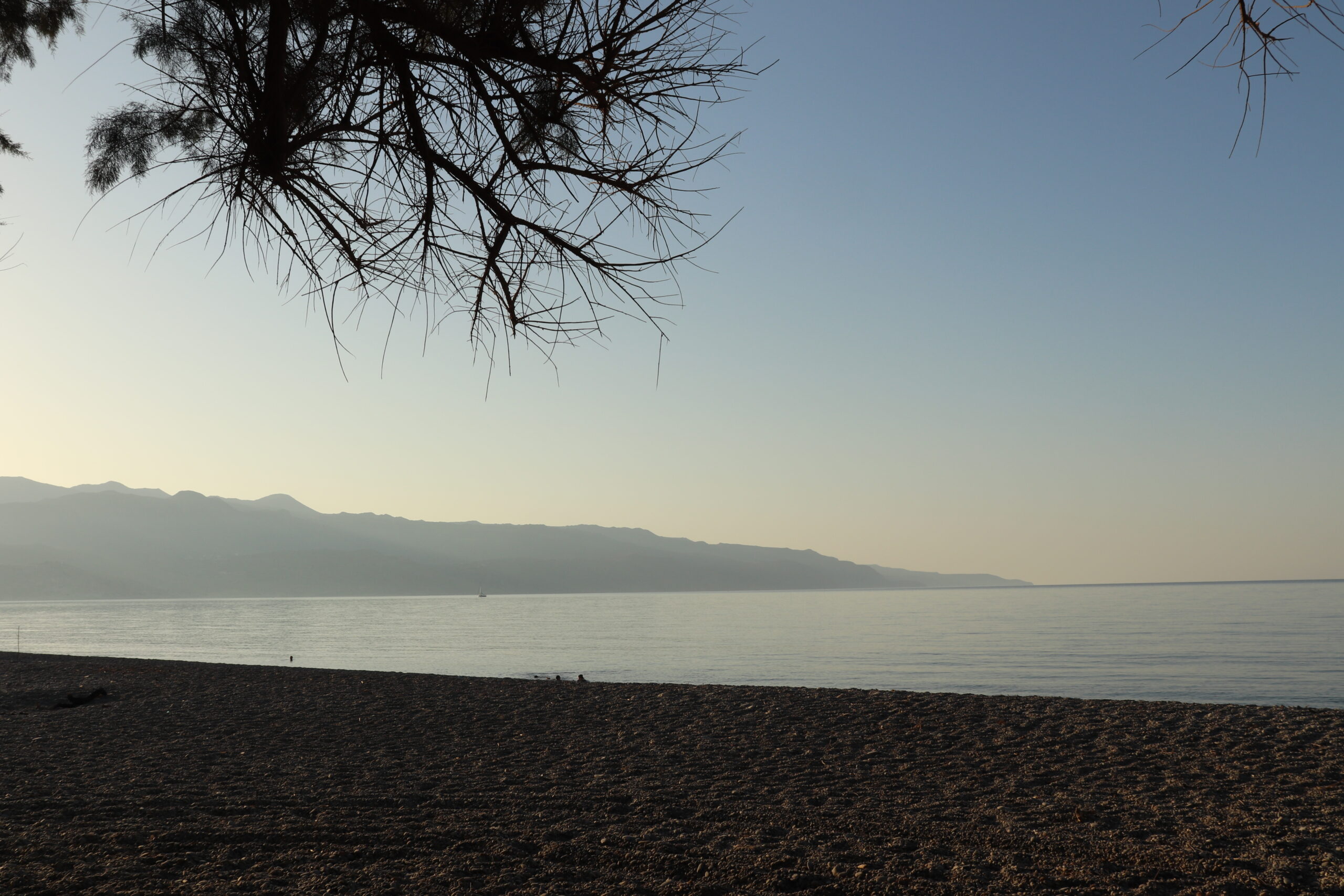
Many wind-protected beaches are located inside natural bays surrounded by hills or rocky headlands. These formations act as barriers that block strong wind.
As wind moves across the island, these natural obstacles reduce its strength before it reaches the water.
This protection helps keep the sea surface calmer compared with exposed coastlines.
Cliffs and Mountain Protection
In several parts of Crete mountains rise directly from the coastline. These landscapes create sheltered coastal areas where wind cannot easily reach the beach.
Cliffs and steep hills may block wind coming from certain directions.
This natural protection can significantly improve swimming conditions.
South Coast Shelter
The south coast of Crete is sometimes more sheltered from northern winds that affect the island during summer. Because these winds travel from north to south, mountain ranges in the center of the island reduce their strength before reaching the southern coastline.
As a result some beaches on the south coast experience calmer conditions.
However, wind conditions can still vary depending on local geography.
Small Coves and Hidden Bays
Small coves surrounded by rocks often provide natural shelter from wind and waves. These compact coastal formations protect water surfaces from open sea exposure.
Even when nearby beaches experience waves, a protected cove may remain relatively calm.
These locations are often quieter and less crowded as well.
Swimming Conditions on Sheltered Beaches
Wind-protected beaches usually offer calmer swimming conditions. Reduced wave activity makes entering the water easier and more comfortable.
Clear water may also be more visible because wind does not disturb sand or sediment as strongly.
These calm environments often create ideal conditions for relaxed swimming.
Choosing a Beach During Windy Weather
When strong winds affect certain parts of the island, visitors often look for beaches located in sheltered areas.
Understanding the orientation of the coastline can help identify calmer locations.
Travelers sometimes move between beaches on different coasts depending on wind direction.
Natural Coastal Diversity
The geography of Crete creates a wide variety of coastal conditions. Some beaches face open sea areas while others lie inside protected bays.
This diversity allows visitors to find calmer water even when wind affects other parts of the island.
Exploring different regions often reveals very different beach environments.
Frequently Asked Questions
Which side of Crete is less windy?
During the common northern summer winds, the south coast often has calmer water. However, local geography can create strong gusts near mountain gaps and gorges.
Is Crete always windy?
No. Wind conditions change by season, region, time of day, and weather system. Northern and northwestern winds are more common during summer, particularly in July and August.
Which beaches are best during northern winds?
Common options include Marathi, Loutraki, Tersanas, Agioi Apostoli, Bali, Agia Pelagia, Limanakia, Elounda, and Makry Gialos.
What should you check before driving to the beach?
Check wind direction, gust speed, wave height, beach orientation, access conditions, and lifeguard warnings. A general island forecast is not enough because conditions can differ significantly between nearby beaches.
Conclusion
Wind-protected beaches in Crete offer calmer sea conditions thanks to natural barriers such as cliffs, mountains, and sheltered bays. These geographical features reduce wind exposure and create more comfortable swimming environments.
Because of the island’s varied coastline, visitors can often find calm beaches even during windy periods.