Matala Beach in winter is one of the most atmospheric places in southern Crete – a small bay with golden cliffs full of caves, a sandy beach and a long hippie history…
This guide focuses on Matala in winter – what the village looks like when the crowds are gone, which places stay open, how the beach feels, and what to expect if you visit outside the main season.
Captured by Zurab Peikrishvili for the CreteTales Project — Canon 800D, August 2025.
Matala’s Hippie History & Cliffs
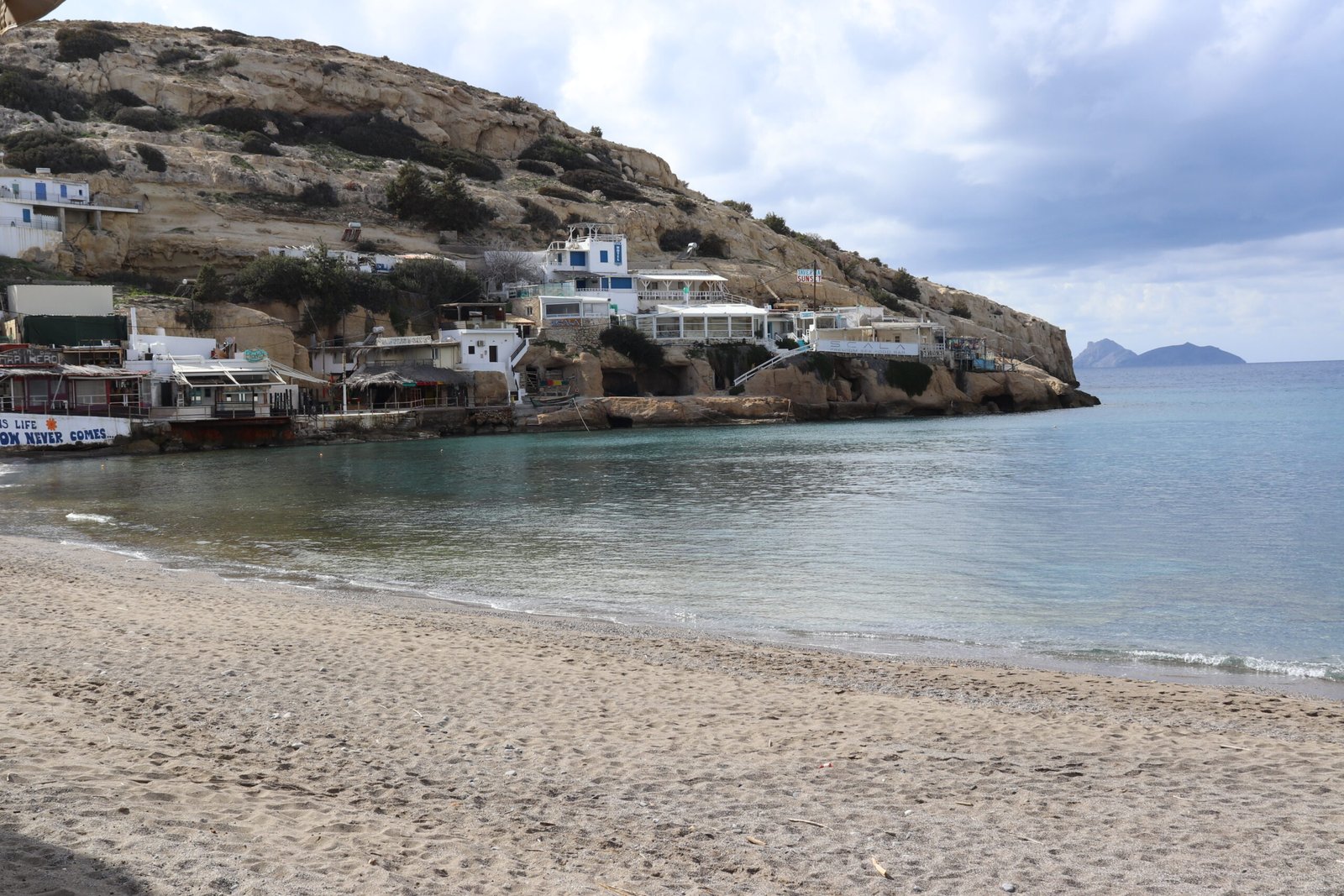
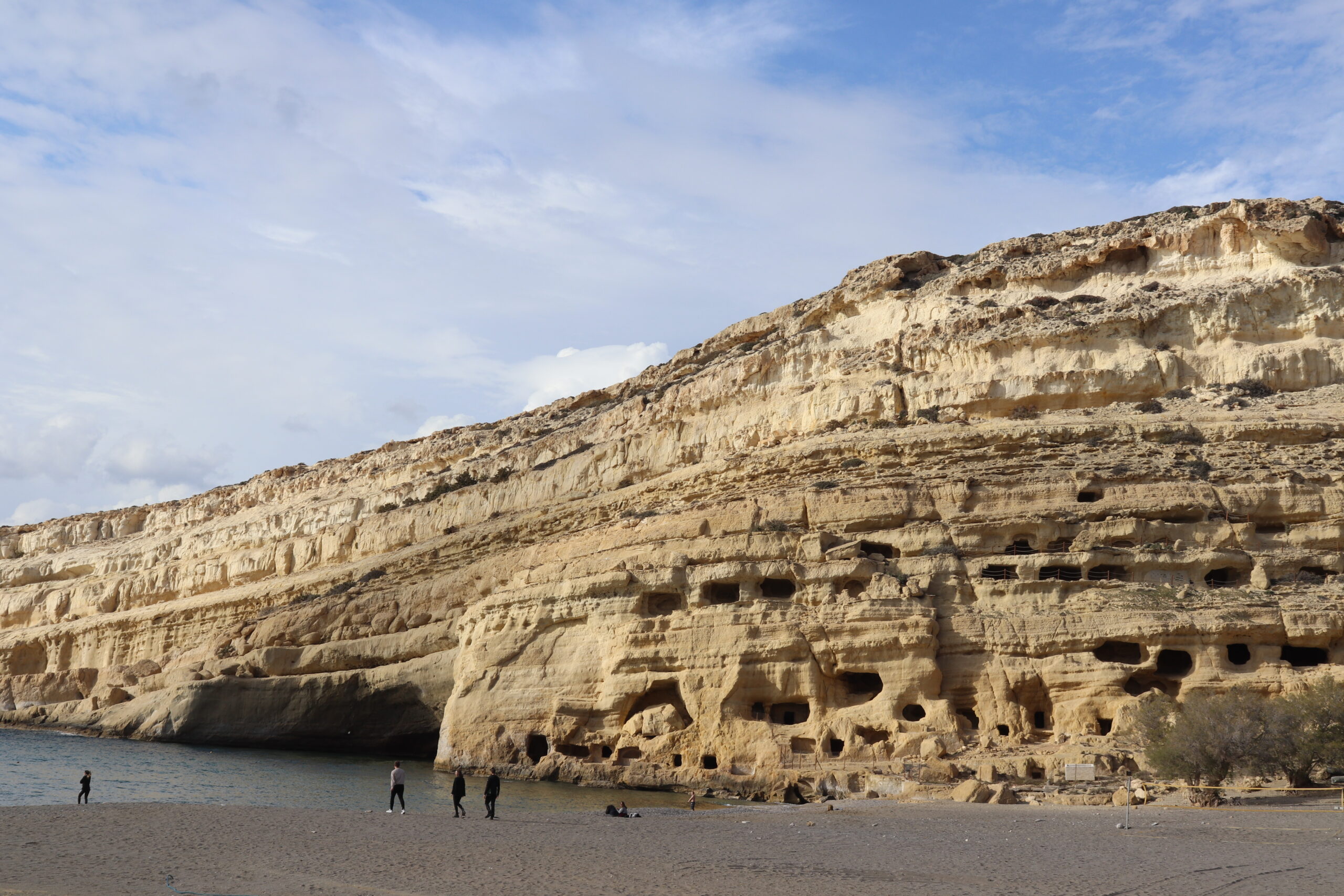
Matala sits on the south coast of Crete, facing the Libyan Sea. The bay is framed by high sandstone cliffs full of man-made caves. In the 1960s and 1970s these caves became home to travellers, artists and musicians, and Matala turned into one of the most iconic hippie spots in Greece.
Today the village is much quieter and more organised, but the mix of dramatic cliffs, simple taverns and a compact sandy beach still gives Matala a very particular character. Even in winter you feel that this is not just another resort, but a place with its own story.
Captured by Zurab Peikrishvili for the CreteTales Project — Canon 800D, August 2025.
Matala in Winter – Quiet but Alive
Visiting Matala in winter feels like seeing a well-known place without make-up. Most sunbeds and seasonal bars are gone, but the village is far from empty. Local families sit in cafés, a few supermarkets and mini-markets stay open, and buses still bring people from other towns for a Sunday lunch by the sea.
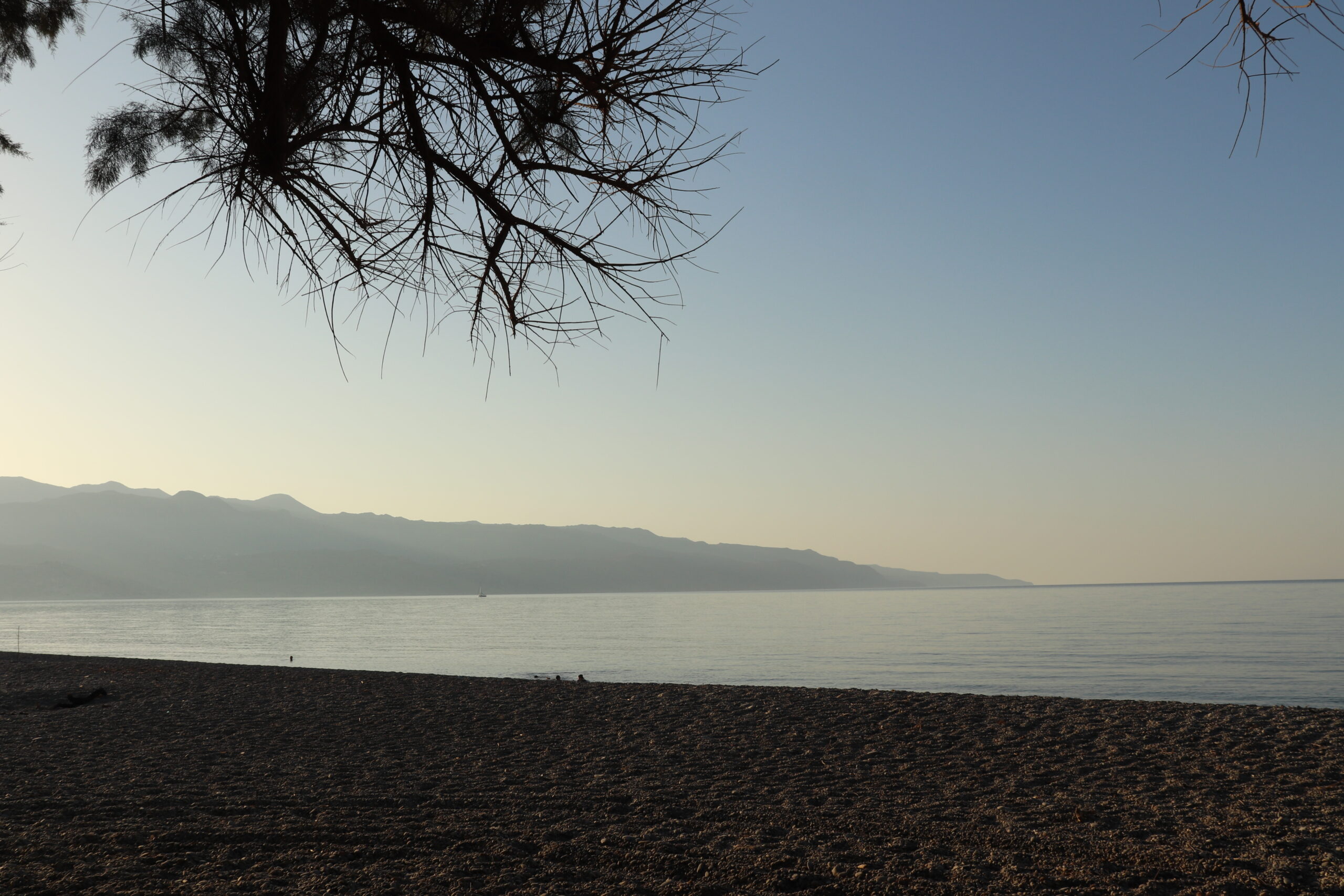
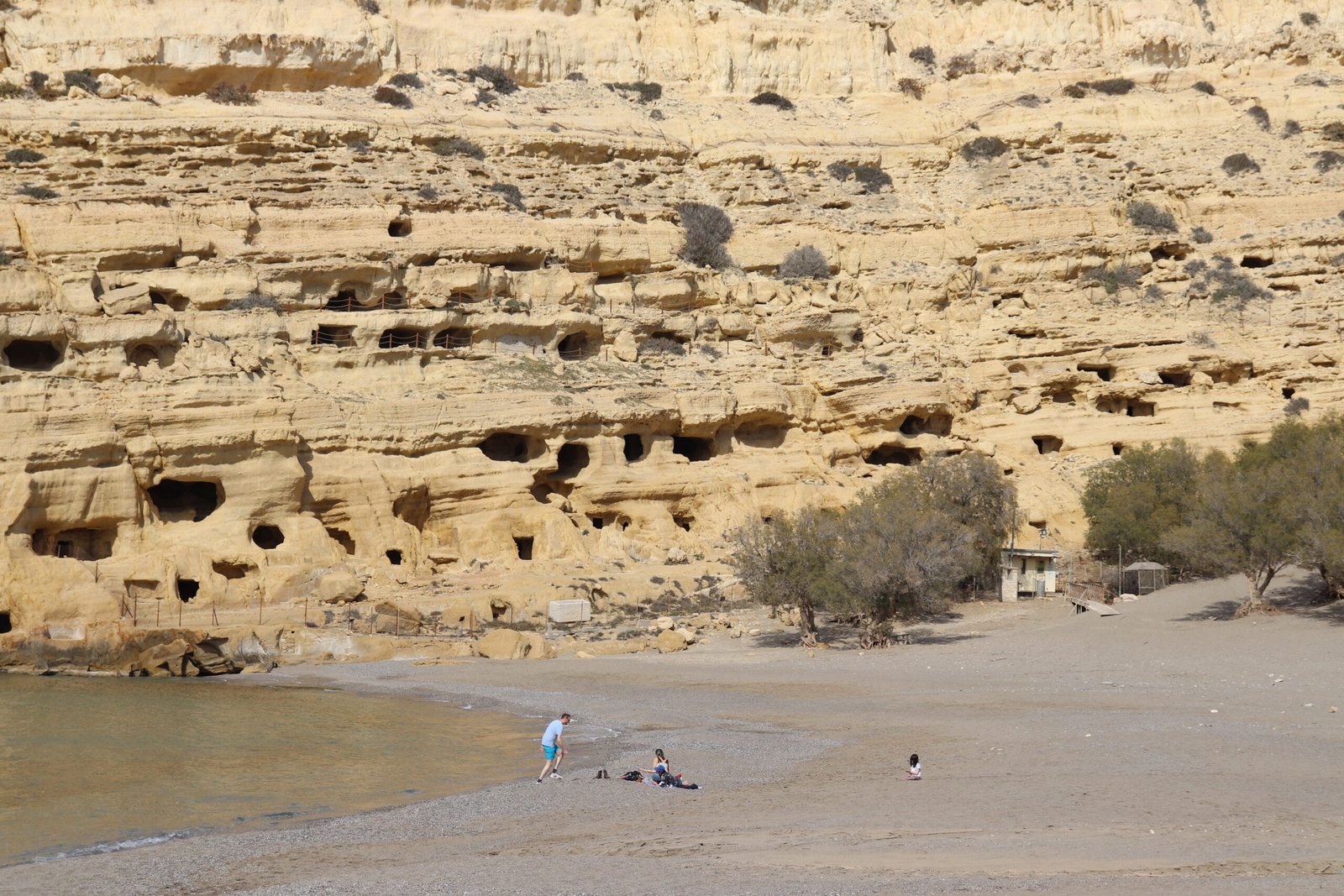
On a sunny winter day the bay is calm, the water is clear and the air is warm enough to sit outside in a light jacket. The beach is almost empty – a few children play near the water, couples walk along the shore and some visitors explore the caves. The atmosphere is relaxed, almost private, and it is easy to imagine how different the place becomes in July and August.
Captured by Zurab Peikrishvili for the CreteTales Project — Canon 800D, August 2025.
Beach and Swimming Conditions
The main beach of Matala is a narrow, curved bay with coarse sand and small pebbles near the waterline. In winter the sea is usually too cool for long swims, but on calm days the water looks incredibly clear and inviting. Even if you don’t go in, it is a beautiful place for a walk along the shore and for photos of the cliffs and caves.
There are no organised sunbeds in the low season, which actually makes the beach look more natural. The bay is well sheltered, so even on windy days the sea is often calmer than on the open north coast.
The Hippie Caves and Cliffs
The caves carved into the rock above the beach are what made Matala famous. Some of them were used as Roman tombs; much later, travellers and hippies turned them into simple cliffside homes. Today the caves are controlled and parts of the site can be closed or fenced in summer, but in winter visitors still climb up and explore the terraces and openings in the cliff.
The view from below is impressive even if you decide not to go up. Layers of sandstone, small openings and ledges create a natural amphitheatre that dominates the whole bay.
Village Life and Central Square in Winter
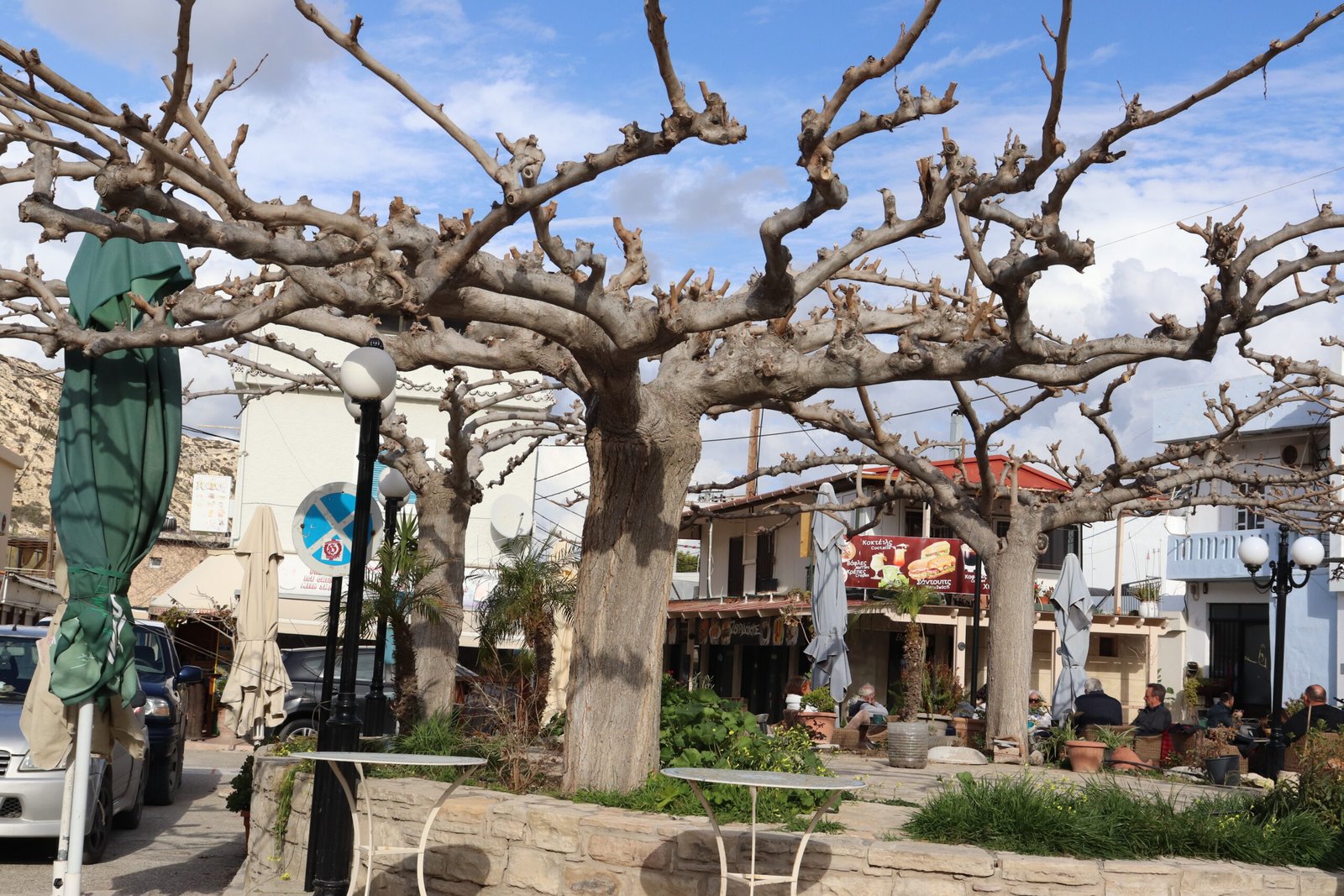
Behind the beach, Matala has a small central square with plane trees, cafés and low houses. In winter most tourist shops are closed, but the square still works as a meeting point for locals: people drink coffee, talk, play with children and watch the sea from a distance.
It doesn’t feel like a resort at this time of year. Instead, the village looks more like a real Cretan community that simply happens to live next to a famous beach.
Captured by Zurab Peikrishvili for the CreteTales Project — Canon 800D, August 2025.
Eating in Matala in Winter
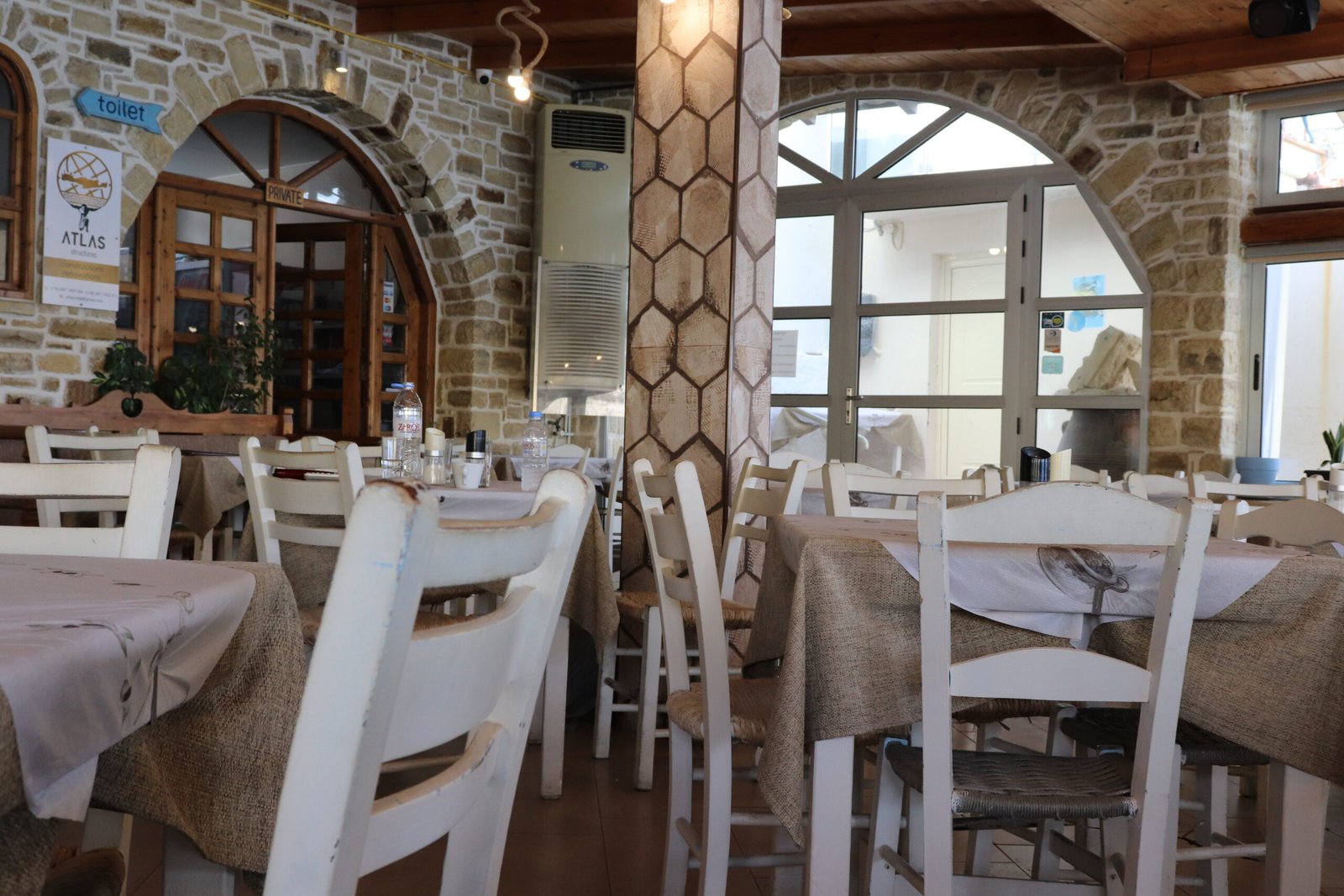
Even in the low season at least one seafront taverna stays open right above the beach. The kitchen is often placed in the middle of the dining room, so guests can watch how the food is grilled and prepared. It gives a very homely feeling – more like lunch in a big family house than in a tourist restaurant.
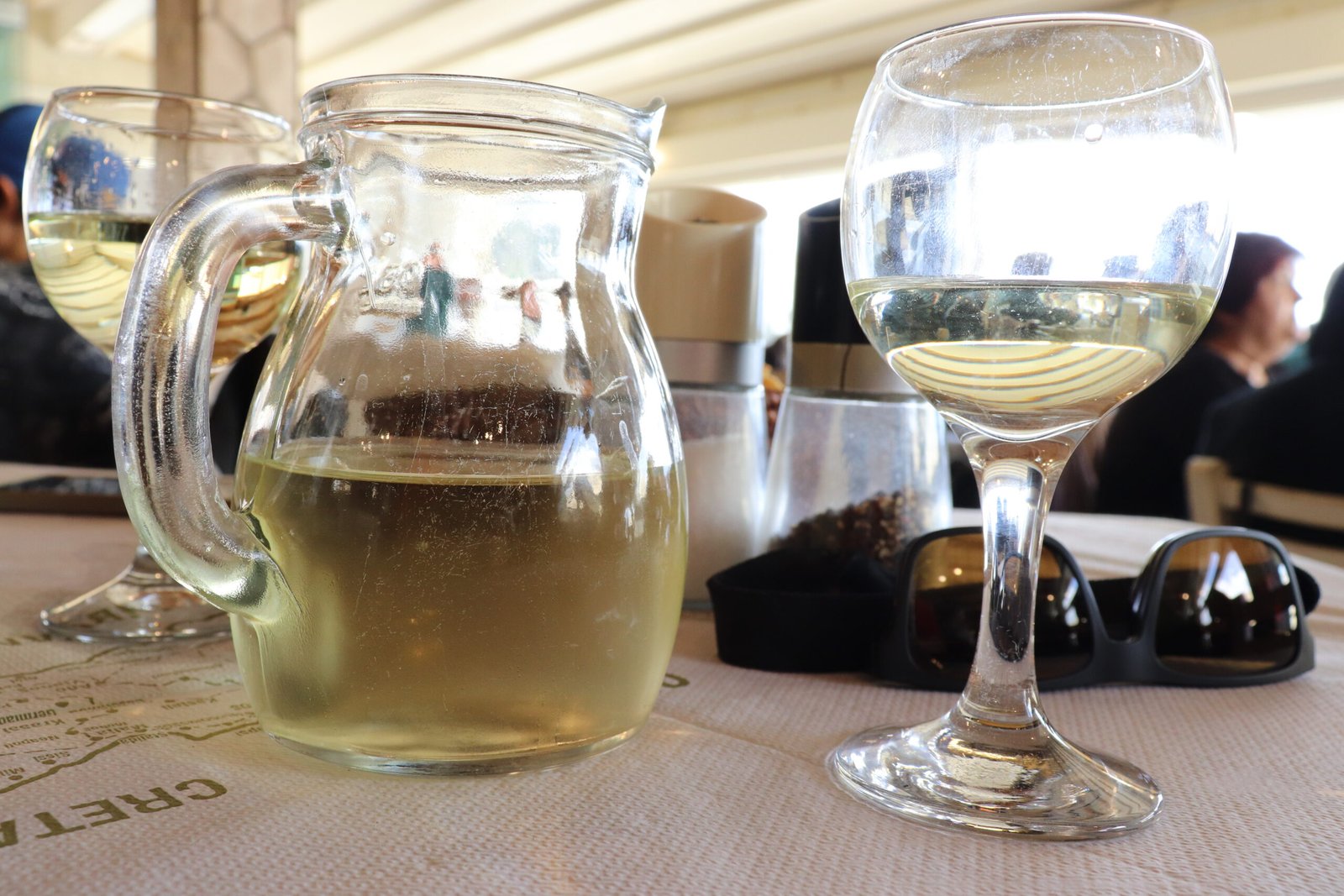
During a winter visit, a simple meal for two – grilled meat (steak-style), a fresh salad and about half a litre of local white wine – comes to roughly 40–45 €. For a famous beach village this is a fair price, especially considering the view of the bay right outside the windows.
Captured by Zurab Peikrishvili for the CreteTales Project — Canon 800D, August 2025.
Captured by Zurab Peikrishvili for the CreteTales Project — Canon 800D, August 2025.
Views and Photo Spots
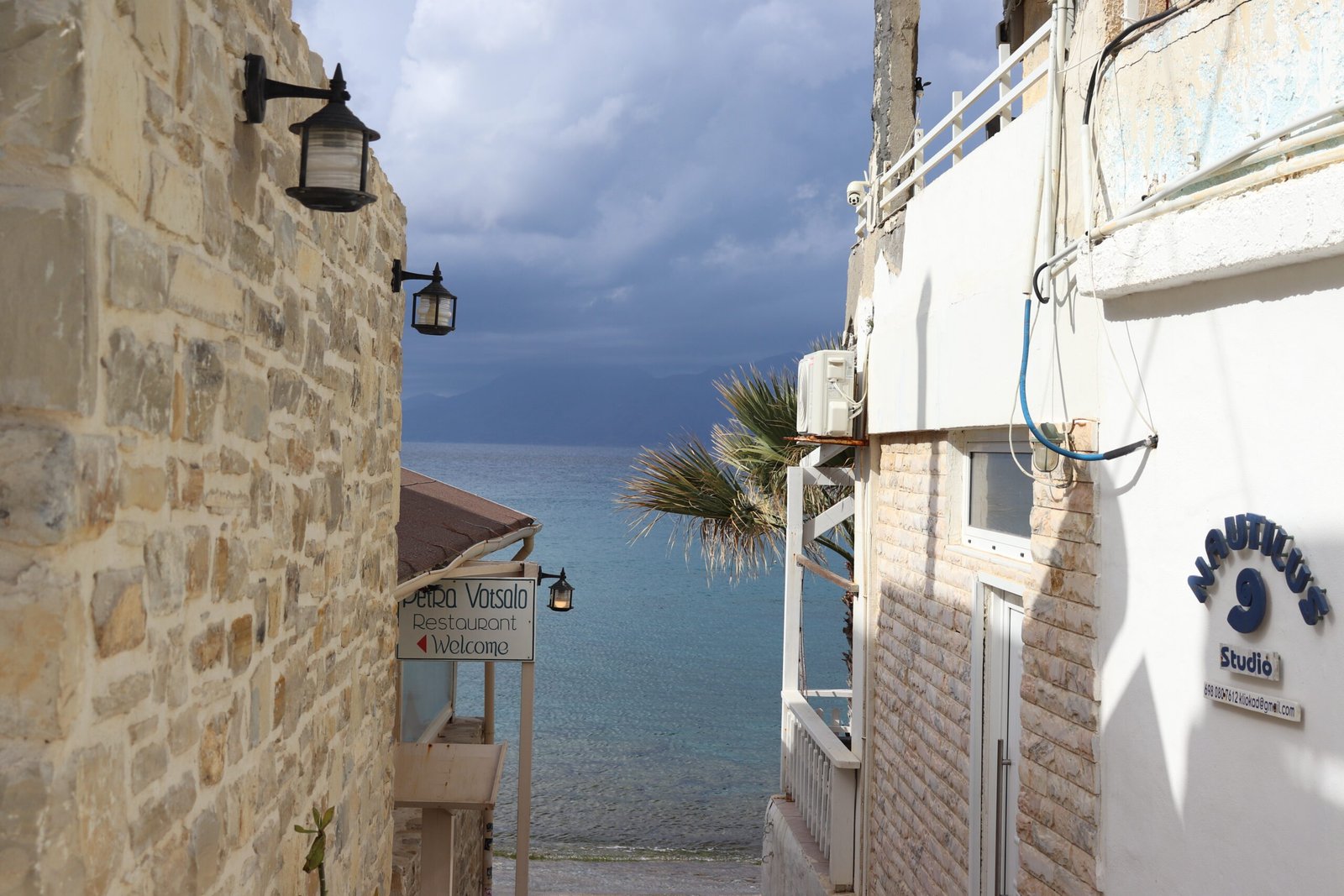
Matala is full of small viewpoints. One of the most charming is a narrow alley that opens directly to the sea, with stone walls on one side and whitewashed houses on the other. From here you see the bay, the horizon and the changing winter sky – an excellent spot for photos and a reminder that the village is literally built on the edge of the water.
Captured by Zurab Peikrishvili for the CreteTales Project — Canon 800D, August 2025.
Practical Information: Parking, Shops and Services
Parking: Around Matala there are several private parking areas. In winter they are mostly empty and easy to use; the typical price is about 5 € for the day. From the parking areas it is only a short walk down to the beach.
Shops and supermarkets: Even out of season at least one or two mini-markets stay open, selling basic groceries, drinks and snacks. Many tourist gift shops are closed until spring.
Public transport: Buses still operate in winter, especially on weekends. They bring visitors from other towns to Matala for lunch, coffee and walks along the beach. Timetables change, so it is always good to check the latest schedule locally.
How to Get to Matala
Most travellers reach Matala either from Heraklion or from Chania:
- From Heraklion: the drive takes about 1 hour 15 minutes to 1 hour 30 minutes, mostly on good roads through the centre of Crete.
- From Chania: the route is longer – usually around 2.5 to 3 hours by car, crossing the island from north to south.
Who Will Enjoy Matala Most
- Couples and photographers who want dramatic cliffs, caves and calm sea views.
- Travellers interested in history rather than just sunbeds and bars.
- Winter visitors who prefer quiet villages, local tavernas and real everyday life.
Final Thoughts
Matala is not only about its famous hippie past. It is a small Cretan village that lives all year round, with real families, simple food and a beach dominated by rock and sea. Visiting in winter shows this side very clearly: the bay feels calm, personal and authentic. Come for a slow walk along the sand, a look at the caves, and a glass of local white wine – and you will understand why this little bay has been attracting people for decades.